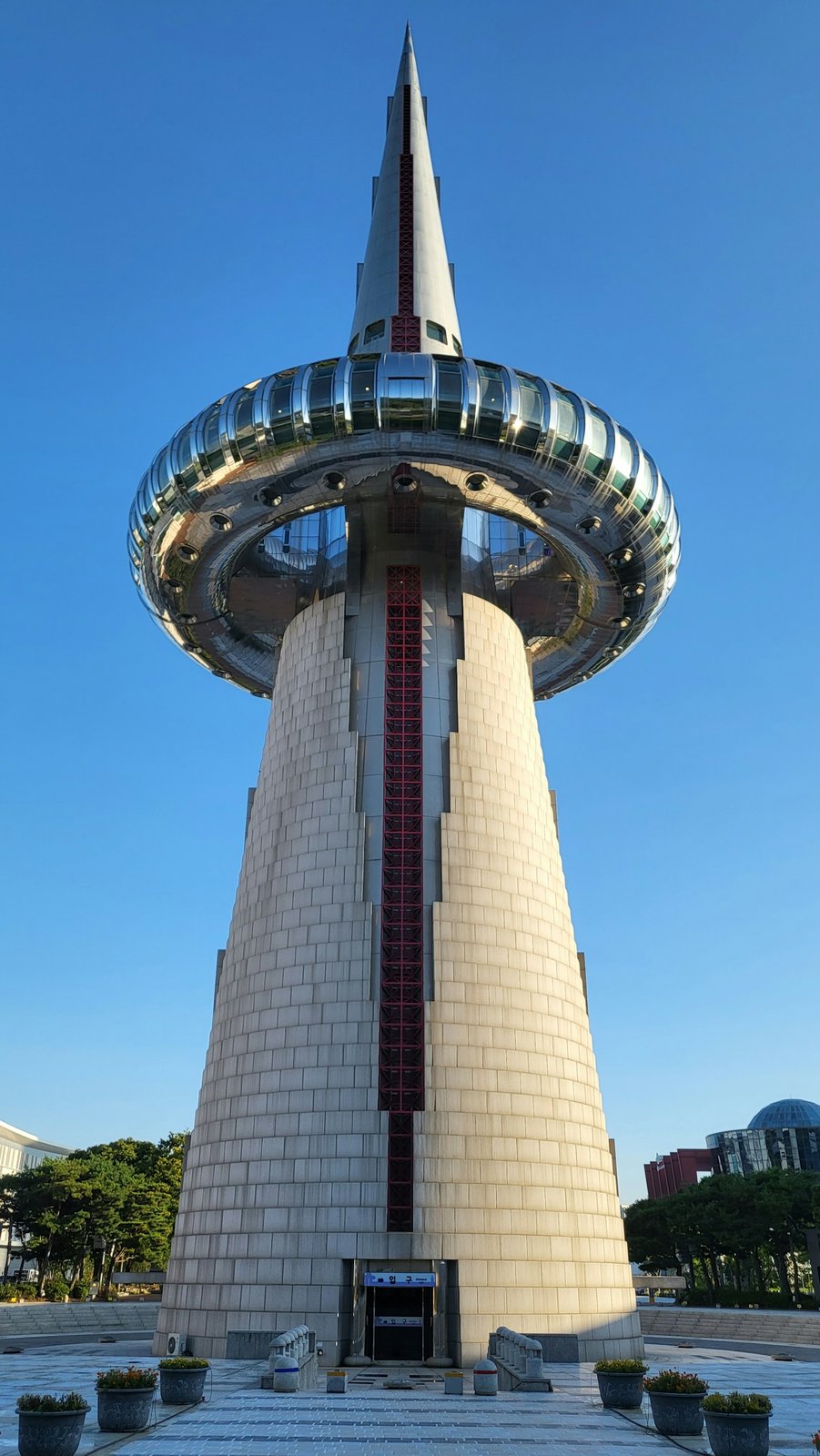
A weekday morning on Daehak-ro in Yuseong-gu. The address on the gate says 291, and behind it is KAIST, a campus where, by our count of government data, more of the foreign students are doing a master's or a PhD than a first degree. People walk in with laptop bags, not with suitcases. Not far away, the white tower from the 1993 World Expo still stands over its park. In the old centre, in Jung-gu, a bakery opens its doors, and the line for a 1,700 won fried sweet bun begins.
We, the Haeyo teachers, should say where we stand. We live and teach with Seoul as our home base, and we like Daejeon for exactly the reasons a Seoul person would: it is calmer, it is close by train, and it takes science seriously. That is a bias, so this article tries to lean on numbers, to say whose numbers they are, and to say plainly who this city is for and who it is not for. The morning above is a composite of facts from our sources, not a report from one particular day.
Who studies here
Nine institutions in Daejeon hold 10,100 foreign students between them, in the same June 2026 data. The largest is not KAIST. It is Woosong University, with 2,594, and most of them are undergraduates. Hannam University has 1,754, but 1,230 of those are in the language programme, which is more than in its degree courses. KAIST, Chungnam National University (CNU) and UST, a graduate school that trains students inside government research institutes, lean the other way: most of their foreign students are in graduate programmes. By nationality, Vietnam comes first with 4,535, then China with 1,609, Bangladesh with 384, Uzbekistan with 369, Indonesia with 322 and Mongolia with 303.
| Institution | Total | Biggest group |
|---|---|---|
| Woosong University | 2,594 | Bachelor's, 1,693 |
| Hannam University | 1,754 | Language course, 1,230 |
| Mokwon University | 1,573 | Language course, 604 (plus 152 other language study) |
| Chungnam National University | 1,023 | Master's and PhD, 424 |
| Pai Chai University | 980 | Language course, 499 |
| KAIST | 960 | Master's and PhD, 532 |
| Hanbat National University | 518 | Language course, 276 |
| UST | 394 | All graduate; 316 PhD |
| Daejeon University | 304 | Bachelor's, 125 |
Counted by stay status in the Ministry of Justice open data. Rows where the school column holds a workplace name were not counted, so every figure is a floor.
One more figure changes how the city feels. In the Ministry of the Interior's count of foreign residents on 1 November 2024, Daejeon had 42,043, or 2.87 percent of its population, and 12,605 of them were international students. That is 30.0 percent, almost one in three. Our own calculation from the same table gives 16.0 percent for Seoul, 20.1 percent for Busan and 3.9 percent for Jeju. Daejeon had only 2,895 registered foreign workers, against 37,734 in Seoul. In Daejeon, the foreign community is, to a large degree, the student community.
Almost one foreign resident in three in Daejeon is a student. In Seoul it is about one in six.
KAIST and the scholarship that comes with the offer
KAIST's admissions office describes a scholarship that international undergraduates do not have to apply for separately. If you are admitted through the international track and tick the financial box on the application, you receive full tuition for eight semesters, 350,000 won a month for living costs, and health insurance. From the second year you have to keep a grade point average of at least 2.7 out of 4.3. We read that on the official page in October 2026.
Graduate support is where we have to be careful. Scholarship websites list monthly stipends for master's and PhD students, but we could not find those amounts on a KAIST page, so we do not print them. A July 2026 news report said foreign freshmen at KAIST and Seoul National University together rose to 139 in 2025, up 26.4 percent, but the article has since been taken down and we saw only a search summary. We also found no current official share of courses taught in English. Ask the department you are applying to: that answer matters more than any average.
Daedeok, the research district

Much of Daejeon's science sits in the Daedeok research and development special zone. A report based on science ministry data counted 2,461 organisations there in 2021, including 26 government-funded research institutes, seven educational institutions and 2,356 companies. They employed about 86,000 people, about 38,000 of them researchers. In April 2026 the ministry's fifth plan for the special zones set a headline goal of 150 trillion won in sales across the zones by 2030, and Daedeok is one of six regional zones in that plan.
We could not find an official count of foreign researchers in Daedeok. The Ministry of Justice data has a category for researchers at academic institutions, with 409 people nationwide, but that is a visa category, not a headcount of every foreign scientist at the institutes. For a graduate student, the practical point is simpler: if your field is engineering or the natural sciences, the labs you might join after your degree are in the same city.
Learning Korean first
The language institute at CNU publishes a clear timetable. It runs four terms a year, each ten weeks and 200 hours, four hours a day, with a morning class from 09:00 to 12:50 or an afternoon class from 13:30 to 17:20, and no more than 15 students in a class. The autumn 2026 term runs from 31 August to 6 November and the winter term from 30 November to 5 February 2027. Applications for spring 2027 are open from 16 November to 11 December 2026. The page does not give the tuition fee, and we will not guess it.
We also did not find official 2026 fees for the language courses at Woosong, Hannam, Pai Chai or Mokwon. If you are comparing, ask each school for the fee in writing, then set it next to the Busan and Seoul fees in our 어학당 guide, which uses the same ten-week, 200-hour unit.
Rent, fares and the train to Seoul
We found no official or press average for a one-room near KAIST and CNU, in Gung-dong and Eoeun-dong. A listings site showed officetels in Gung-dong rented on a 10 million won deposit at 300,000 to 350,000 won a month in 2026. That is an example from listings, not an average, and it is not measured the same way as the Seoul figures in our student-month money article, so we do not compare the two.
Daejeon has one subway line, Line 1, with 22 stations between Banseok and Panam. Sources disagree on the fare: a 2023 news report said that from 1 January 2024 the adult card fare would be 1,500 won for city buses and 1,550 won for the subway, while a fare blog lists the subway at 1,400 won. We leave it unverified until we can check it against the transit corporation. From 1 January 2026 Daejeon joined Everyone's Card, a wider version of the national K-Pass refund scheme.
Line 2 is a tram, and its date has moved. The plan is 38.8 kilometres with 45 stops. Building began in December 2024, aiming to open in the second half of 2028, but on 23 June 2026 the city said the opening was likely to slip to around the second half of 2030, citing a delayed land settlement for an underpass and about ten months of delay on work under the Honam railway line. The final schedule is still to be fixed. If you see 2028 somewhere, it is out of date.
The train is Daejeon's strongest card. A timetable site lists a standard KTX seat from Seoul Station to Daejeon at 23,700 won, with non-stop trains taking about 52 to 59 minutes and trains with stops about an hour to an hour and ten minutes. We have not checked those figures against Korail, so book on the official app. Even so, the idea is clear: Seoul is a day trip, not a journey.
What kind of city it is
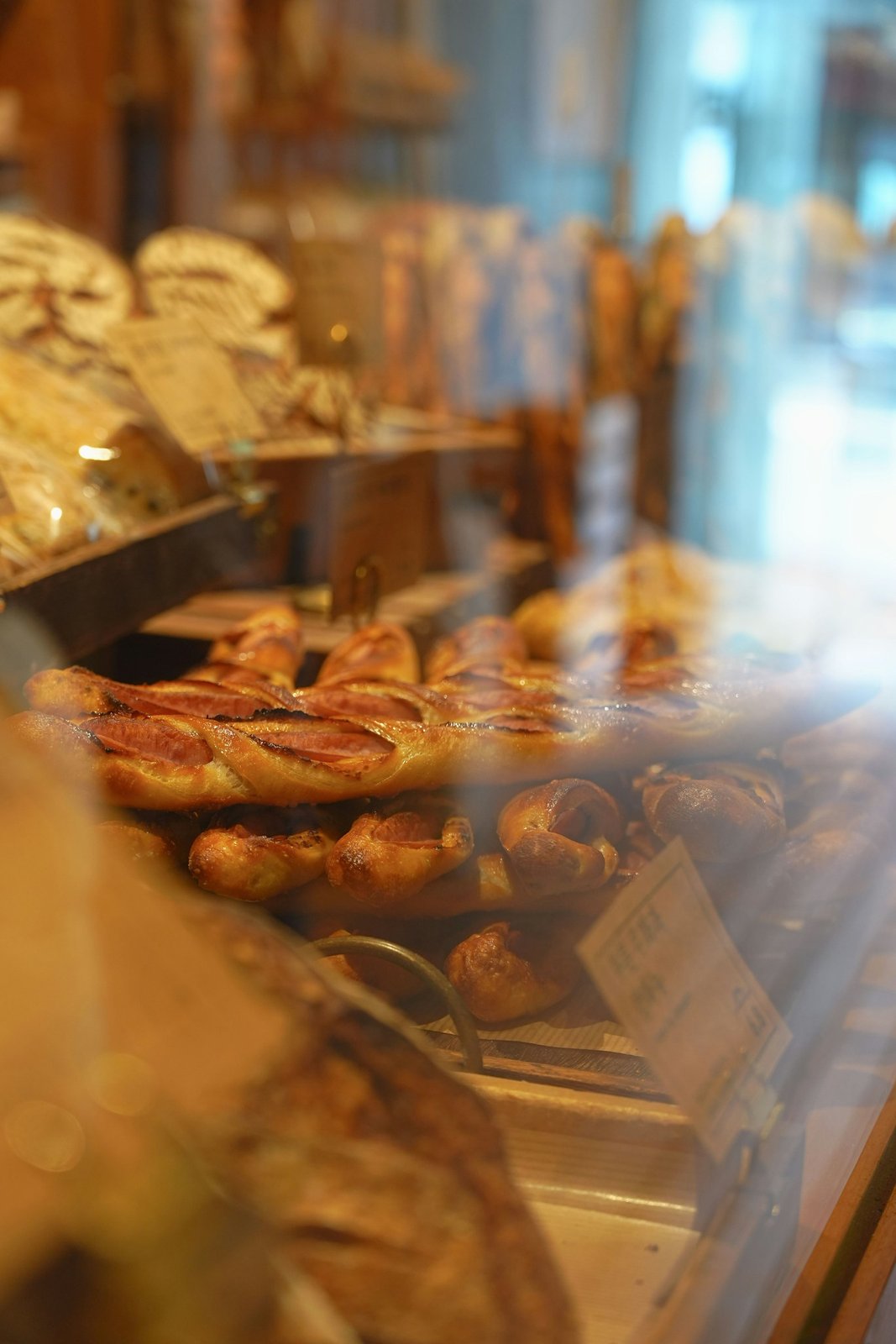
Ask people what they know about Daejeon and many will name a bakery. Sungsimdang, run by a company called Rosso, reported 262.9 billion won in sales in 2025, up 35.7 percent, and an operating profit of 64.3 billion won, according to a report based on its audited accounts. That profit was larger than the combined operating profits of two national bakery chains that year. Jung-gu, where the main shop is, recorded 49.31 million visits in 2025. The fried sweet bun, 튀김소보로, costs 1,700 won, and the bakery turns 70 in 2026.
The city also throws a big summer party. The city said the Daejeon 0 O'clock Festival drew more than 2.16 million visits from 8 to 16 August 2025. The 2026 festival ran from 7 to 17 August, with a shorter four-day main programme; we did not find its visitor count. The park in our first photo is a memory of Expo '93, which ran for 93 days from 7 August to 7 November 1993, and a travel site gives the Hanbit Tower a height of 93 metres, to match the year. Yuseong is also known for its hot springs. We found no official source to quote on them, so we leave it at that.
Who Daejeon suits, and who it does not
Here is our judgment, with the evidence for each part.
Suits: graduate students in science and engineering
At KAIST, 532 of 960 foreign students are in master's or PhD programmes, and all 394 at UST are graduate students. CNU has twice as many foreign graduate students (424) as undergraduates (207). The research institutes of Daedeok are next door.
Suits: undergraduates who want a big foreign student body outside Seoul
Woosong has 1,693 foreign bachelor's students, and Hannam has 1,230 in its language course. You will not be the only newcomer in class.
Suits: people who want Seoul within reach
About an hour by KTX, by a timetable site we could not confirm with Korail. You can live here and still go up for a weekend.
Does not suit: people who want a large mixed foreign community
Daejeon had 42,043 foreign residents in 2024, against 450,888 in Seoul, and only 2,895 foreign workers. Outside campus, the community is small.
Does not suit: people who need a dense rail network now
One subway line, and the tram is now forecast for around late 2030. Plan on buses, or on living close to your campus.
Not proven either way: nightlife
We found no figures on nightlife or on the size of international social scenes, so we will not claim Daejeon is quiet or lively. Visit for a weekend and decide.
If you plan to work part-time, the national minimum wage is 10,320 won an hour in 2026 and has been set at 10,700 won for 2027. The rules on how many hours students may work are in our article on working while you study. With fewer foreign workers here, we would not assume part-time jobs are as easy to find as in Seoul, but we have no figure to prove that.
The numbers, with their labels
- Foreign residents in Daejeon and how many are students (Ministry of the Interior, 1 Nov 2024)
- 42,043, of whom 12,605 students (30.0%)
- Foreign students at KAIST and how many are in graduate school (Ministry of Justice data, 30 Jun 2026, our tally)
- 960, of whom 532 master's or PhD
- Largest foreign student body in Daejeon (Ministry of Justice data, 30 Jun 2026, our tally)
- Woosong University, 2,594
- KAIST Scholarship for international undergraduates (KAIST Admissions, read Oct 2026)
- 8 semesters' tuition, 350,000 won a month, health insurance; keep a 2.7/4.3 GPA
- Tram Line 2 (city forecast reported 23 Jun 2026)
- 38.8 km, 45 stops; opening around late 2030
- KTX Seoul Station to Daejeon, standard seat (timetable site, 2026)
- 23,700 won; about 52 to 59 minutes non-stop (unverified)
- Sungsimdang sales and operating profit (2025, from audited accounts)
- 262.9 billion and 64.3 billion won
- Daejeon 0 O'clock Festival visits (city figure, 2025)
- More than 2.16 million
Our tally of the Ministry of Justice file counts students by stay status and gives minimum figures. The subway fare is left out because sources disagree.