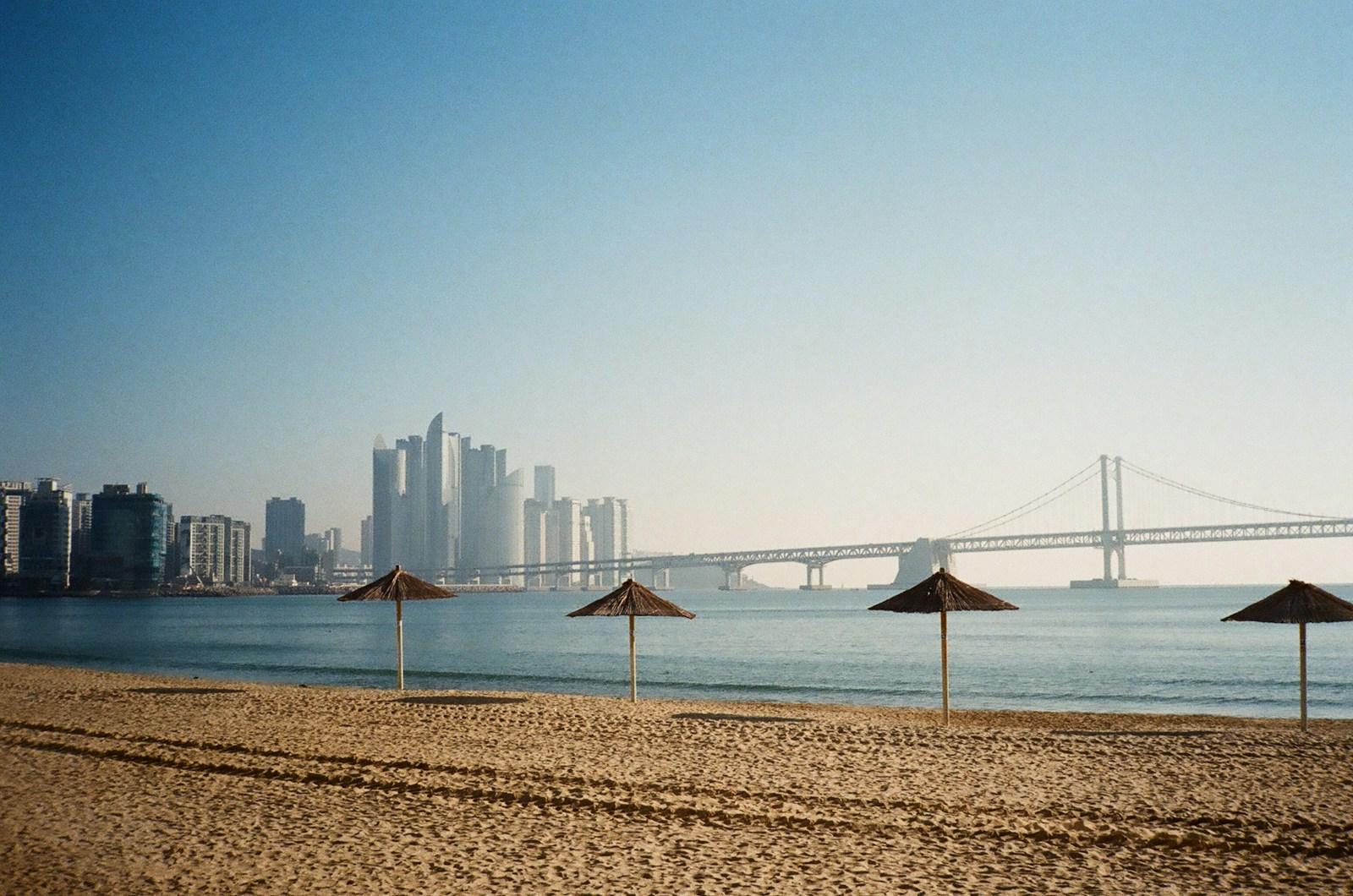
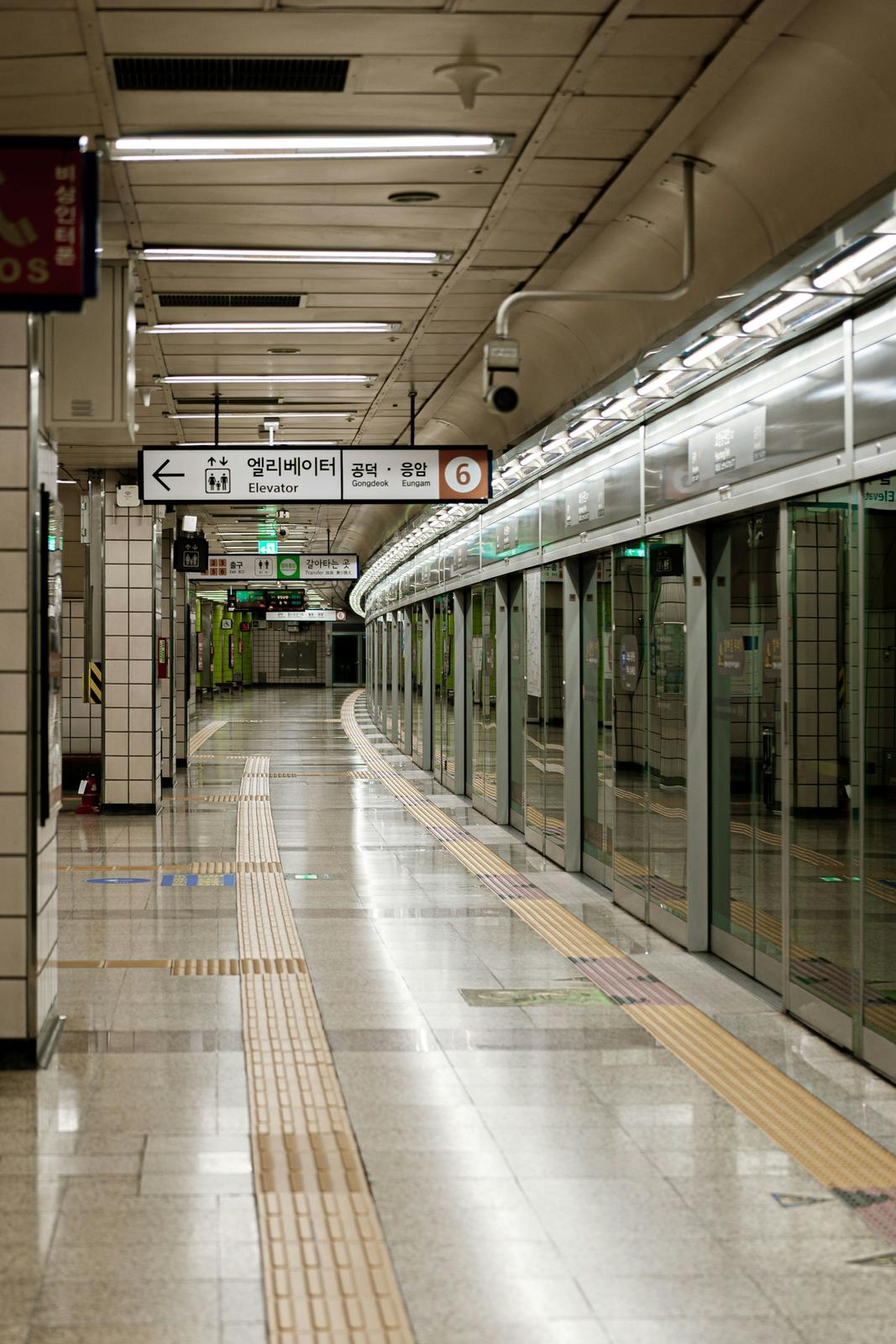
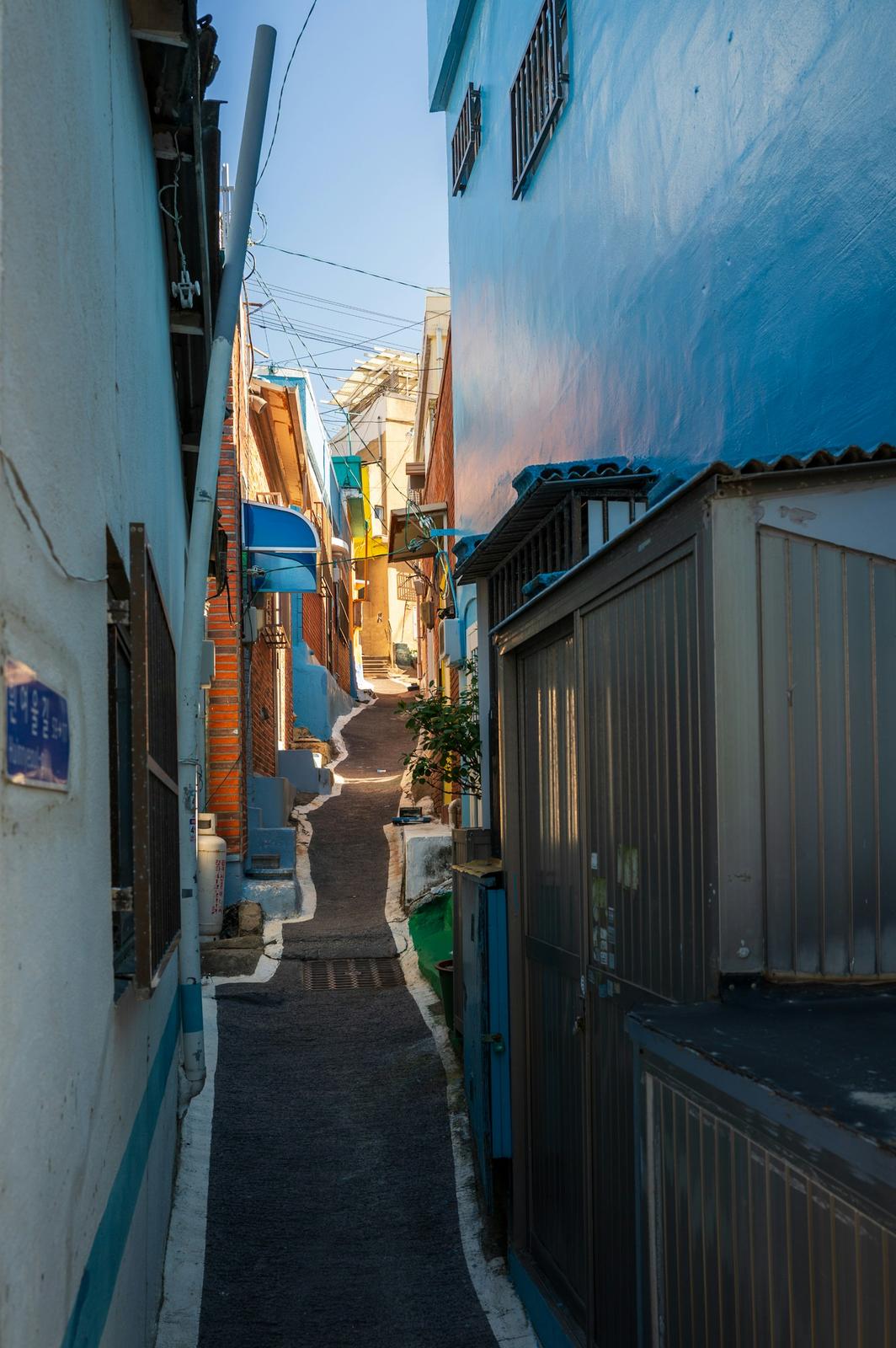
A weekday, a little before nine. At Daeyeon station on Busan's Line 2, the escalators carry up a crowd of people in their twenties with backpacks, earphones and paper cups of coffee. The announcement on the train has just named the station in four languages: Korean, English, Japanese and Chinese. Above ground, the crowd splits three ways, because three universities share this one neighbourhood: Kyungsung, Pukyong and Tongmyong. The road outside is a strip of copy shops, cheap lunch counters, phone stores and cafes with study tables, and in the side streets the low buildings are full of small rooms rented by the semester.
Listen to the people on the pavement and you will hear a lot of Korean, but also Vietnamese, Chinese, Nepali and Uzbek. That is not a guess about the mood of the street. It matches the official count. Vietnam is by far the largest group of international students at Busan's four-year universities, with 6,082 of them in mid-2026, followed by China, Nepal and Uzbekistan. Kyungsung, one of the three campuses at this station, has more foreign students than any other university in the city: 2,124.
We, the Haeyo teachers, are based in Seoul, and we will say so up front, because it colours what we notice. When students tell us they are thinking about Busan, our first reaction is a Seoul person's reaction: the sea, the beaches, the seafood, a slower city. This article tries to get past that. It asks what it costs to study in Busan, what the city is doing to bring students in, what changes when you leave Seoul, and what does not get better just because there is a beach. The morning above is a composite of a real place, not a report of one particular day. Every number from here on has a source next to it.
How many students, and where
Busan City says the number is at a record. In September 2026 the city announced 24,328 international students in Busan, the highest it has ever counted. The newspaper report of that announcement gave no breakdown by university or nationality.
For the breakdown we went to the Ministry of Justice's open data on international students, which lists every student visa holder in Korea, one line per person, as of 30 June 2026. We counted the Busan universities ourselves. A K-Study Times report on the same data put the total for Busan's fourteen four-year universities at 17,606: 11,871 on degree courses, 5,080 on language courses and 655 on exchange or research. Our own count came to 17,603, close enough to trust the shape.
Why is the city's figure higher by more than 6,000? Most likely because it counts more kinds of school, such as junior colleges and graduate-only schools. That is our reading, not something either source says, so treat it as unverified. What it means for you: use 24,328 when you want the city's own headline, and the ministry data when you want to compare universities. Do not mix the two.
| University | Total | Degree / language / exchange |
|---|---|---|
| Kyungsung | 2,124 | 1,454 / 567 / 101 |
| Dong-A | 2,082 | 915 / 1,103 / 60 |
| Busan Univ. of Foreign Studies | 1,762 | 1,211 / 464 / 87 |
| Dongseo | 1,625 | 1,038 / 512 / 75 |
| Pusan National | 1,547 | 1,043 / 371 / 132 |
| Pukyong National | 1,400 | 948 / 386 / 65 |
| Dong-eui | 1,195 | 995 / 115 / 83 |
| Korea Maritime and Ocean | 353 | 189 / 151 / 13 |
Our own count of the ministry's open data. Degree = bachelor's plus master's and doctoral; language includes a small number of foreign-language trainees. The data has about 74,000 rows nationwide where the 'school' column holds a workplace name, so read every figure as a minimum. Also counted: Youngsan 1,630, Silla 1,596, Tongmyong 1,576.
Two patterns stand out. At Pusan National and Pukyong, graduate students outnumber undergraduates: Pusan National has 618 master's and doctoral students against 425 on bachelor's courses. At Dong-A, the language students (1,103) outnumber everyone on bachelor's and graduate courses combined (915). So the city has two different student worlds. One is research labs and graduate offices, the other is a language institute with classes of fifteen and a new intake every ten weeks.
Busan is riding a national wave. Korea's 2026 education statistics counted 307,464 international students in higher education on 1 April, up 21.3 percent, and for the first time Vietnam (96,834) passed China (78,890) as the largest group. We looked for a reliable figure for the share outside the capital region and did not find one we could trace, so we leave it out.
What the city wants, and what it offers
In March 2024 Busan launched what it calls the Study Busan 30K Project. It set three goals for 2028: 30,000 international students, 30 percent of them in science and engineering, and 40 percent of graduates moving on to a work or job-seeking visa. When the plan was announced the city counted about 13,000 students, 12 percent in science and engineering, and 22 percent changing to a work or job-seeking visa after graduation. The 30,000 is a target, not a forecast, and the starting figure was counted a different way from the 2026 headline, so we do not draw a growth line between them.
Since then the city has added a single front door. The Study Busan Hub opened on 10 February 2026 to bring together support that used to be scattered across individual universities. It also runs Korean-language help and culture mentoring. It is too new for us to judge how well it works, and we found no figures on how many students have used it. The city is also recruiting abroad: in late May and early June 2026 it ran study-in-Busan fairs in Almaty and Bishkek with ten and nine universities, and says about 2,000 students and parents came.
Then there are the visas, and here it is easy to get confused, because Busan is in two separate schemes. The first is a wide-area visa pilot for students. It runs for two years, 2025 and 2026, with a quota of 1,000 people at fourteen universities that have departments linked to semiconductors, batteries and car parts. It eases the money requirement and allows internships during the semester. A November 2025 report said a little over 300 people had been approved.
The second is the regional visa, F-2-R, which is about where you live and work after study. In Busan it applies only in three districts that the government lists as losing population: Seo-gu, Dong-gu and Yeongdo-gu. It is not the whole city. In 2024 the quota for local talent was 40 people per district, 120 in all. We could not confirm the 2026 quota or timetable. The city has asked the government to widen the scheme beyond those three districts, but as far as we found, it has not happened yet.
The city also tries to connect students with employers. The 2026 BUSAN Dream Job Fair, held at BEXCO on 30 April for international students in Busan, Ulsan and South Gyeongsang, had 44 companies, up from 35 the year before. Their fields were manufacturing, hotels, tourism and conventions, services, logistics and trade, and healthcare. Forty-four companies is a real start. It is also a small room compared with the number of students the city wants to keep.
The 30,000 is a target, not a forecast. Busan wants its students to stay, and is still building the doors for them to stay through.
Language school fees
Most students who come to Busan first spend some time in a university language institute, so we looked for 2026 fees on the universities' own pages. We found three. All three run four ten-week terms a year, so you can start in almost any season.
| Institute | Fee per term | What we found |
|---|---|---|
| Pusan National | 1,500,000 won | Spring 2027 notice; 1,400,000 in 2025. Books and culture activities included |
| Pukyong National | 1,300,000 won | 2026; 10 weeks, 200 hours, four hours a day, about 15 per class |
| Dong-A | 1,300,000 won | 2026; 10 weeks, 200 hours. New students must live in the dormitory (paid separately) |
| Yonsei (Seoul) | 1,600,000 won | Level 1, 10 weeks, 200 hours; the page shows no year |
Fees are from each school's own page or guidebook. We did not find 2026 official fees for Dongseo, Kyungsung, Dong-eui, Busan Univ. of Foreign Studies or Korea Maritime and Ocean.
The comparison with Seoul is fair in one narrow way: all four are ten weeks and 200 hours. On that basis, a term at Pukyong or Dong-A is 300,000 won less than at Yonsei. We cannot promise that each fee includes the same things, so read the fine print. Pukyong's guidebook also asks for a bank balance of at least 8 million won, and lists a double room in its Sejong 1 hall for six months at about 2.6 million won with three meals a day.
Two more details. Pusan National gives its own enrolled students a 30 percent discount on the language course, which matters if you plan to stay on for a degree there. And Dong-A's winter term 2026 starts on 30 November, with applications having closed on 2 October, so the next window is the following term. For a longer comparison of institutes in Seoul and beyond, see our language institute guide.
Rent and the monthly bill
This is the section most readers want, and where we have to be most careful. A common line online is that Busan rent is 20 to 30 percent cheaper than Seoul. We looked for a survey that measures both cities the same way and could not find one. Seoul has good figures: Dabang's analysis of small one-room flats on a 10 million won deposit put the Seoul average at 710,000 won in March 2026 and 640,000 in June, and ten university areas averaged 625,000 won in July. We found nothing built the same way for Busan, so we do not give a percentage.
What we can show is what landlords are asking. In July 2026, a listings site showed many rooms near Pusan National University in Jangjeon-dong at a 5 million won deposit and 280,000 to 370,000 won a month, for 14 to 17 square metres. Another site showed a goshiwon near Jangjeon station at 250,000 won a month. These are asking prices on community sites, not averages and not signed contracts. Take them as a picture of the market, and then go and look.
Dormitories are the other option. Pukyong's exchange fact sheet for fall 2026 lists a double room at about 2 million won a semester, with three meals a day. Its language programme dormitory, quoted above, works out to about 2.6 million won for six months with meals. Neither is a flat-rate comparison with a private room, because meals are included.
Getting around is cheaper in a way you can measure. A subway ride on the first fare zone costs 1,600 won with a transit card, after the May 2024 rise. The city bus base fare was 1,550 won in an October 2024 report; we have not checked whether it has changed. Since 19 September 2025, transfers between buses, the subway and the light rail have been free across the wider region.
The city's own pass is the bigger deal. The Dongbaek Pass refunds whatever you spend on public transport above 45,000 won in a month, up to a cap of 45,000 won. From April 2026, if you link it with the national K-Pass, the refund has no upper limit. In other words, a month of heavy travel costs you about 45,000 won. We could not confirm the sign-up rules for foreign students, so ask your university's international office before you count on it. Our guide to getting around Seoul explains the K-Pass.
Arriving by air means Gimhae airport. The Busan-Gimhae light rail runs from Sasang, and you can change at Daejeo for Line 3. Airport limousine buses came back on 31 July 2025, and in December 2025 the fare on Limousine 2, which serves Seomyeon and Bujeon, dropped to 6,000 won for adults.
Weather and work
Busan is warmer than Seoul, and wetter. The weather service's 1991 to 2020 normals give Busan an average year of 15.0 degrees and 1,576.7 mm of rain. Seoul's are 12.8 degrees and 1,417.9 mm. That is two degrees warmer and about 160 mm more rain each year. The winters are milder. The rain is real, so a good umbrella is not optional. We did not find a reliable count of how often typhoons affect the city, so we say nothing about them here.
For work, the national rules apply in Busan exactly as in Seoul. The 2026 minimum wage is 10,320 won an hour, or 2,156,880 won a month at 209 hours. The rate for 2027 has been set at 10,700 won. How many hours a student visa allows, and where, is in our guide to working while studying.
What is different is the shape of the economy. Busan City's investment pages, quoted by K-Study Times, say services were 75.8 percent of the city's economy in 2023 and manufacturing 17.4 percent. The port handled 24.3 million containers (TEU) in 2024, the seventh busiest in the world. If your field is logistics, trade, shipbuilding or tourism, the city has more of those employers than most. If you want a big technology company headquarters, most of those are in the capital region, and that is one of the clearest trade-offs of leaving Seoul.
What changes when you leave Seoul
We tried to build a side-by-side table and kept it honest: only lines where both cities come from the same source.
| Item | Busan | Seoul |
|---|---|---|
| Average temperature (1991-2020) | 15.0 C | 12.8 C |
| Rain per year (1991-2020) | 1,576.7 mm | 1,417.9 mm |
| Language course, 10 weeks, 200 hours (2026) | 1,300,000 won (Pukyong, Dong-A) | 1,600,000 won (Yonsei) |
| Foreign residents, share of population (Nov 2024) | 88,542 (2.72%) | 450,888 (4.83%) |
| Students among foreign residents (Nov 2024) | 20.1% | 16.0% |
| Rent, commute time, size of foreign community | No matching data | No matching data |
Temperatures and rain from the weather service; fees from each school; foreign-resident figures from the interior ministry's 2024 count, with the student share our own arithmetic.
A few things are clear from the table. Busan is warmer and has more rain. A language term can cost less. And foreign residents are a smaller share of the city than in Seoul, 2.72 percent against 4.83, but a bigger share of them are students: one in five, against about one in six in Seoul. In practice, a foreign face in Busan is a little more likely to belong to someone who is also going to class.
Some things change that a table cannot show. Busan people do not talk like Seoul people. Even in a short conversation you may hear questions end in -나 or -노: 밥 먹었나? for a yes-or-no question, 뭐 먹었노? when there is a question word like 뭐. Both are listed in the national dictionary as Gyeongsang dialect endings. Your textbook will not teach them, and you do not need to use them, but it helps to recognise them. Our article on regional Korean in this issue goes further.
Other things do not change. The visa rules, the minimum wage and the TOPIK are national. You still need a bank, a phone plan, an alien registration card and a lot of patience in the first month. The city is large, with about 3.3 million people by city figures quoted in the press, so 'smaller than Seoul' does not mean small. And if you want to compare Busan with the other cities outside the capital, our pieces on Daejeon and on Jeju in this issue use the same sources where they can.
The honest downsides
We like Busan. That is a bias, so here are the problems as plainly as we can put them.
The data has gaps
We could not find a 2026 official fee for five of the eight largest language institutes, or a Busan rent survey that matches Seoul's. You will be comparing with less information than in Seoul.
The visa routes are narrow
The wide-area visa pilot covers 2025 and 2026 with 1,000 places at fourteen universities. F-2-R works only in Seo-gu, Dong-gu and Yeongdo-gu. Neither is a city-wide promise.
Fewer big employers
The job fair had 44 companies in 2026. The economy leans to services, the port and manufacturing. Many headquarters are in the capital region.
More rain
About 160 mm more rain a year than Seoul, by the weather service's normals. Plan for wet weeks.
Seoul is a trip away
Embassies, many company interviews and many events are in Seoul. We did not verify a train fare or time for this article, so check Korail before you count on day trips.
A new support system
The Study Busan Hub opened in February 2026. It may help a lot. It is too early to know, and we found no usage figures.
None of these is a reason not to come. They are reasons to come with a plan: check your institute's current fee in writing, ask the international office about the transport pass and the hub, and if a work visa is the goal, find out early whether your department is on the list for the wide-area pilot.
The numbers, with their labels
- International students in Busan (Busan City, 2026)
- 24,328, a record
- International students at 14 four-year universities (Ministry of Justice data, 30 Jun 2026)
- 17,606 (11,871 degree, 5,080 language)
- City target for 2028 (Study Busan 30K, announced 2024)
- 30,000 students; 30% science and engineering; 40% to work visas
- Wide-area visa pilot (2025-2026)
- 1,000 places; a little over 300 approved by Nov 2025
- Language course, 10 weeks, 200 hours (Pukyong and Dong-A, 2026)
- 1,300,000 won per term
- Subway, first zone / city bus base fare (2024 reports)
- 1,600 won / 1,550 won
- Average temperature and rain (weather service, 1991-2020)
- 15.0 C; 1,576.7 mm
- Foreign residents (interior ministry, Nov 2024)
- 88,542, 2.72% of the population
Different counts measure different things. The city's 24,328 and the ministry's 17,606 cover different sets of schools.
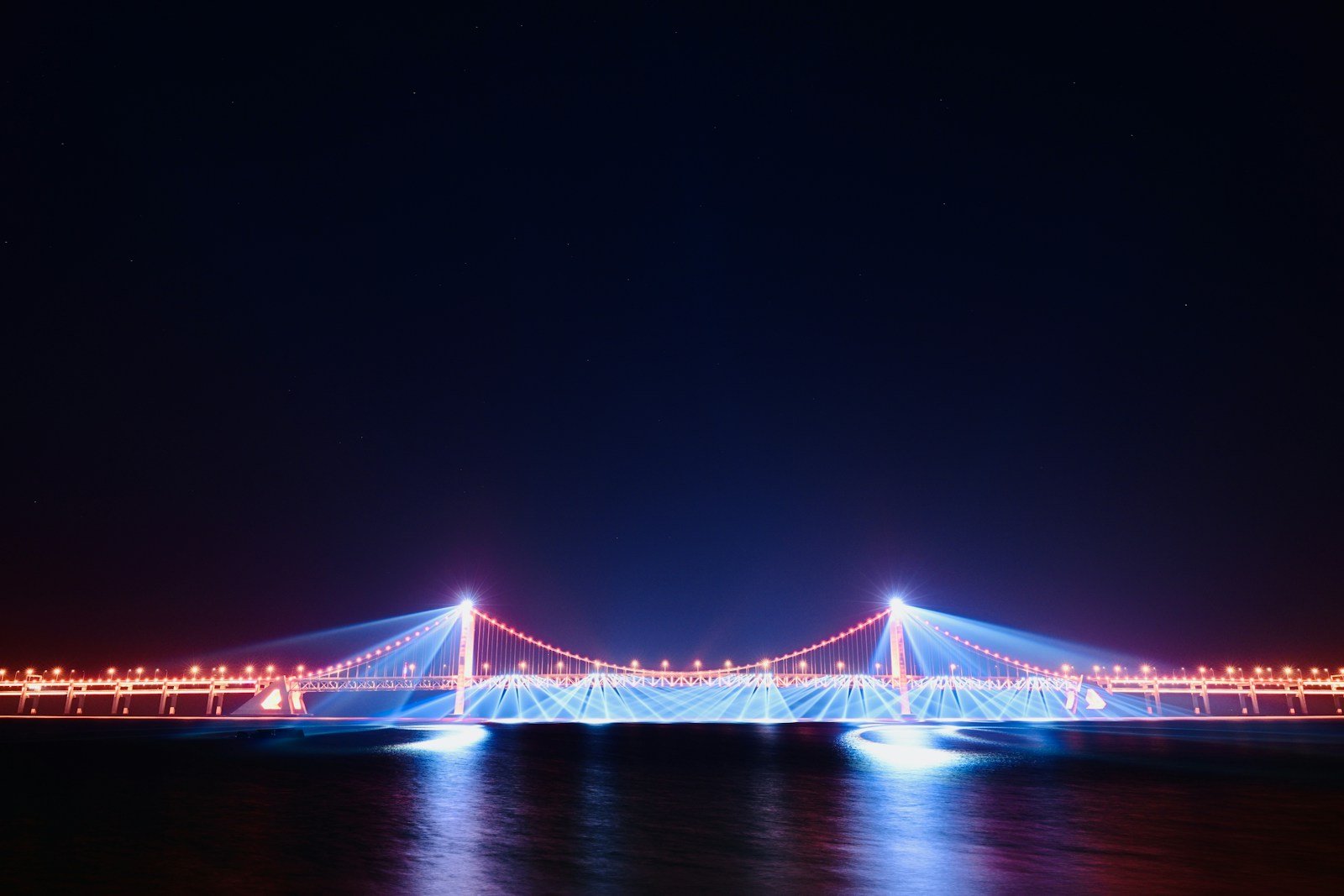
Evening at Daeyeon station, the morning in reverse. The lunch counters are shutting, the copy shops are still open, and the escalators now carry the crowd down. Some will change trains for the beach, some for a part-time shift, most for a small room and a pile of homework. Not far away, the bridge across Gwangalli bay switches on its lights. It is a fine view, and it is not why you should come. Come because the course fits, the fee is right and you have read the visa rules. The sea is a bonus you get to keep.