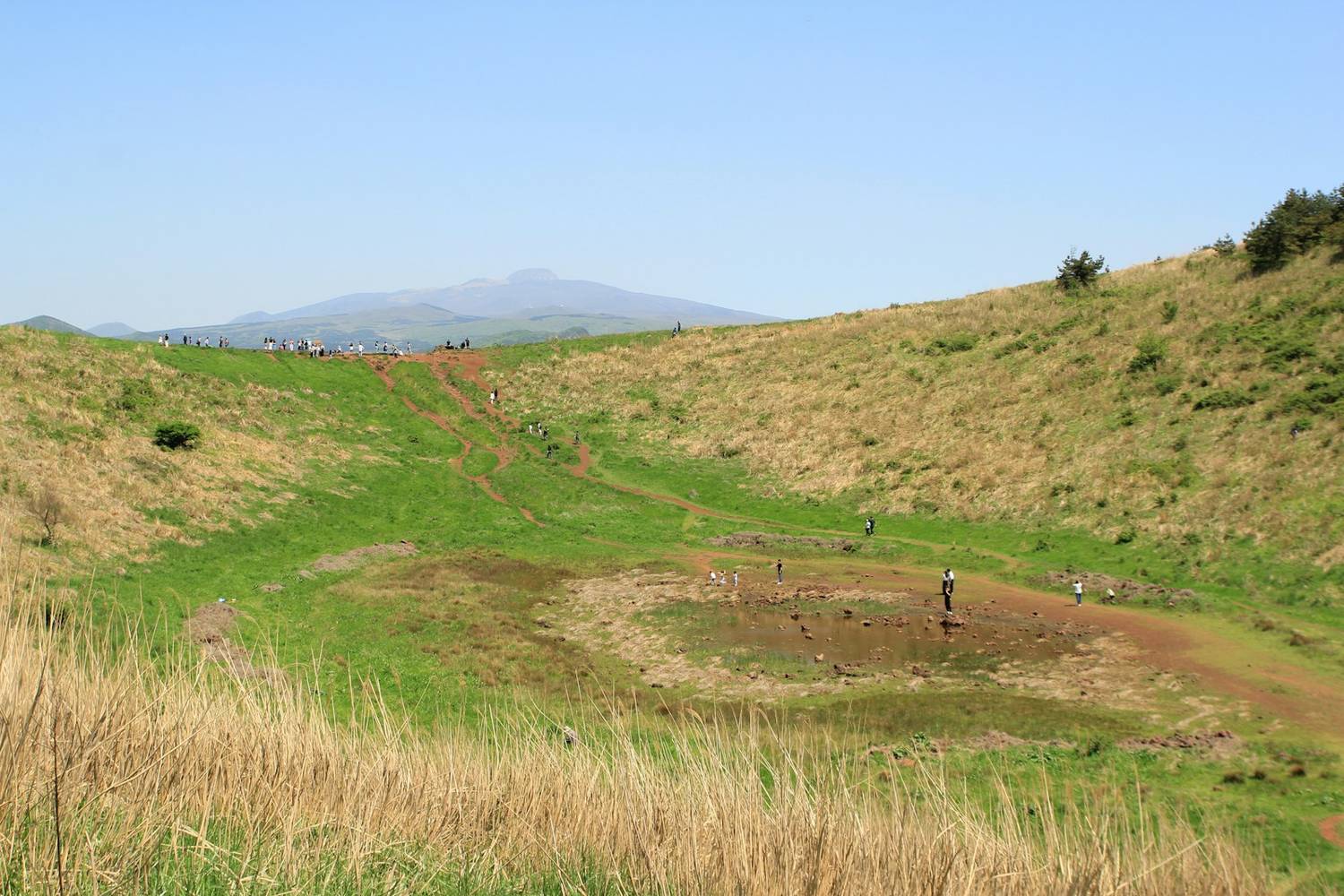
The plane from Gimpo comes down over a flat, dark coast, and the cabin starts to move before the seatbelt light is off. Nobody looks surprised by the flight. They should, a little: in 2025, about 13.3 million passengers flew between Gimpo and Jeju, and IATA counted it as the world's busiest route between two airports for the second year running, more than six times the number on New York JFK to Los Angeles. Outside the terminal the air is softer than in Seoul. Then the questions begin. Where is the subway? There is none. How much is the rent? Often it is quoted by the year.
We, the Haeyo teachers, love Jeju on holiday, and that is exactly why we wanted to write about it carefully. A week on the island and a year of study on it are different things. This article puts the gains and the costs side by side, says where each number comes from, and says plainly where we could not find one. The arrival above is a composite built from our sources, not a report from one flight.
An island of foreigners, not of students
Here is the surprise. In the Ministry of the Interior's count on 1 November 2024, Jeju had 38,714 foreign residents, 5.74 percent of its population. That is a higher share than Seoul's 4.83 percent and about twice Daejeon's or Busan's. But only 1,524 of them were international students, 3.9 percent. The largest group was foreign workers, 12,361, followed by 3,201 marriage migrants. So you may hear many languages in Jeju, but on campus you will meet far fewer fellow students than in Daejeon, where almost a third of foreign residents are students.
Our tally of the Ministry of Justice data for 30 June 2026 gives Jeju National University 512 foreign students: 124 doctoral, 84 master's, 84 bachelor's, 199 in the language programme, 15 on exchange and a handful of others. Graduate students outnumber undergraduates by about two and a half to one. Jeju International University had 187, Jeju Halla University 138 and Jeju Tourism College 347. At the first three combined, the top nationalities were Vietnam (281), China (191), Nepal (108), Pakistan (53), Sri Lanka (42) and India (33).
We could not find the 2026 fee for the language programme at Jeju National University. A search summary of an older exchange fact sheet mentions dormitory rooms of up to about 890,000 won a term, depending on the building and excluding vacations, but we could not open the document itself. Ask the university directly, and compare the answer with the fees in our 어학당 guide.
The English Education City
In Daejeong-eup, in the south-west of the island, the Jeju English Education City has four international schools in operation: NLCS Jeju, Branksome Hall Asia, St. Johnsbury Academy Jeju and KIS Jeju. In 2025 they had 4,144 pupils, about 72 percent of their 5,762 places. A fifth school, Fulton Science Academy Atherton, broke ground on 28 April 2026 and aims to open in August 2028 with 63 classes and 1,354 places, the first new school there in eleven years.
For readers looking for teaching work, this is the most visible employer cluster on the island. We could not confirm which visas the schools hire teachers on, or what they pay, so we do not print figures. Our article on teaching English in Korea covers the E-2 route in general.
Visas: what the famous visa-free rule does and does not do
Jeju is known for visa-free entry. Under the Jeju Special Act, nationals of most countries can enter through Jeju airport or Jeju port for tourism or transit and stay up to 30 days without a visa, but only on Jeju; leaving for the mainland is not allowed, with a permit possible for some nationalities. Nationals of countries on a Ministry of Justice list cannot use it. The latest notice we could confirm is from 30 May 2022, and we could not open its attached country list. A 2022 news report named 24 excluded countries, but we do not know whether that list still applies, so check HiKorea or the ministry before you book.
Two points for students. First, visa-free entry is for visitors. It is not a way to study or work on the island. Second, the regional F-2-R visa, which some cities use to keep graduates, covered 107 areas in 2025, and we found no evidence that any part of Jeju was among them. We also do not say it is absent; we simply could not confirm it. Seasonal farm and fishery workers come in large numbers nationwide, more than 110,000 planned for 2026 by press reports, but we found no figure for Jeju. Our visas article explains the categories.
Rent paid once a year
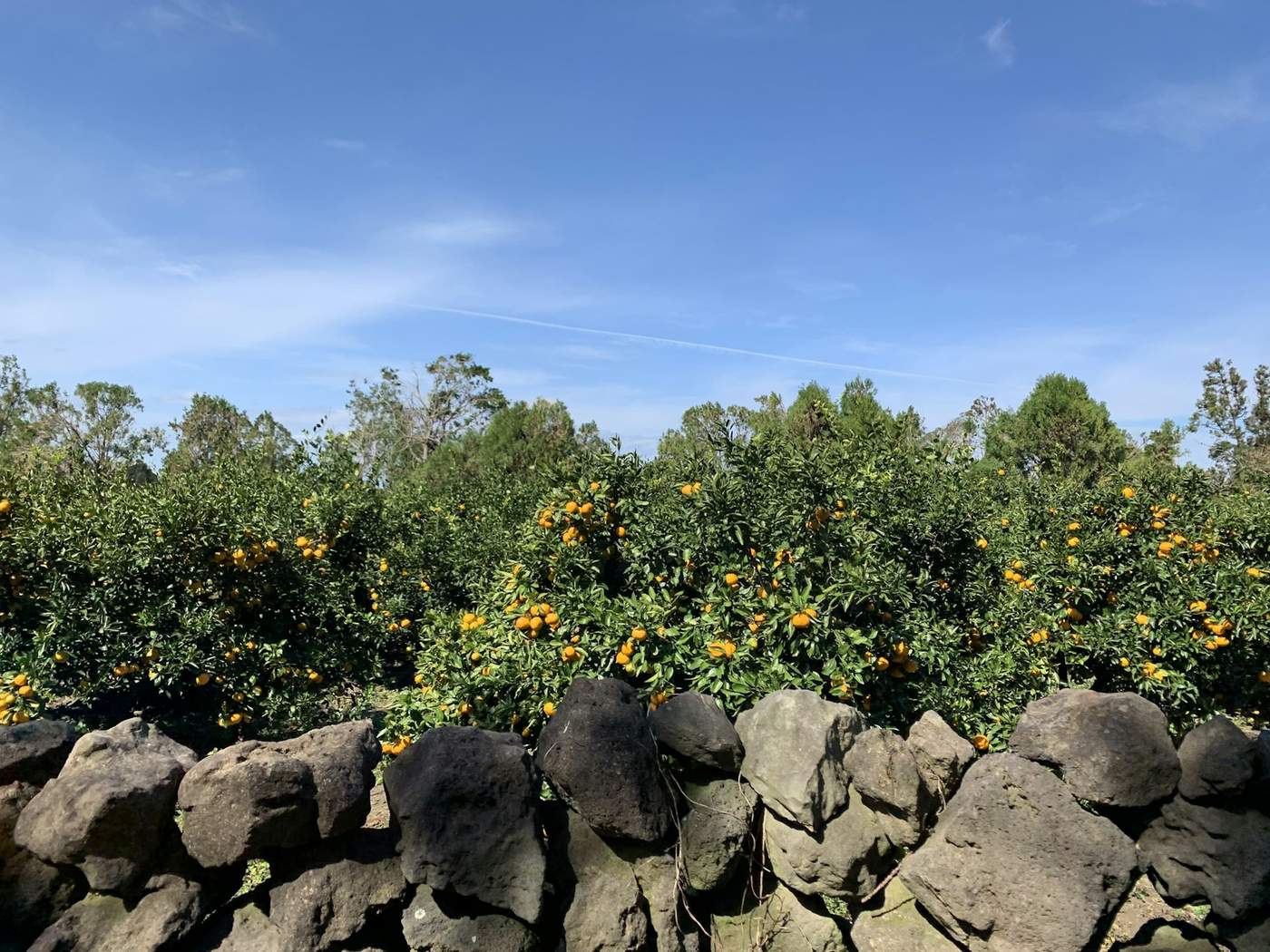
Jeju has its own way of renting, called 연세 (yeonse): you pay a whole year's rent in one payment. It is neither the monthly 월세 nor the large-deposit 전세 you may know from Seoul. A 2019 news report explains the custom. We found no statistics on yeonse prices. A property app showed hundreds of one-room listings on yeonse in Jeju-si in October 2026, but listings are asking prices, not averages, so we print no figure. The practical problem is obvious: a year of rent at once is hard on a student budget, and if you leave early, ask before you sign what happens to the rest.
The island tax on parcels
If you shop online, Jeju costs more. A survey for the provincial government, using 2021 data and reported in January 2022, found an average delivery fee of 2,534 won per parcel to Jeju, 5.7 times the 443 won to the mainland. The island surcharge alone was 2,091 won, and 54.3 percent of the 897 products checked carried one. A 2023 report put the average extra fee in 2022 at 2,160 won. We found no 2024 or 2025 survey. A provincial programme that helped residents with these fees has been reported as ending, but we could not confirm the year. Our errands article covers sending parcels at the post office.
Buses, cars and planes
Jeju has no subway. Bus fares have not changed since July 2014, 127 months by February 2025, when a study for the province set out three options: 1,400, 1,500 or 1,700 won. We could not confirm the current adult fare or whether any rise has been decided. Express and airport buses were to be reviewed at the same rate. We have no figures on how many students drive, and driving needs a licence that Korea accepts. Our own impression, which we cannot source, is that the island is easier with a car, and that a student without one should live near a bus route to campus.
Leaving the island means flying, and that is less easy than it was. In June 2026 there were 3,022 flights from Jeju to Gimpo, 343 fewer than a year earlier, about eleven fewer a day, and domestic seats out of Jeju fell about 9.1 percent to some 2.25 million. We found no reliable fare range, so we print none.
Weather, and the wind
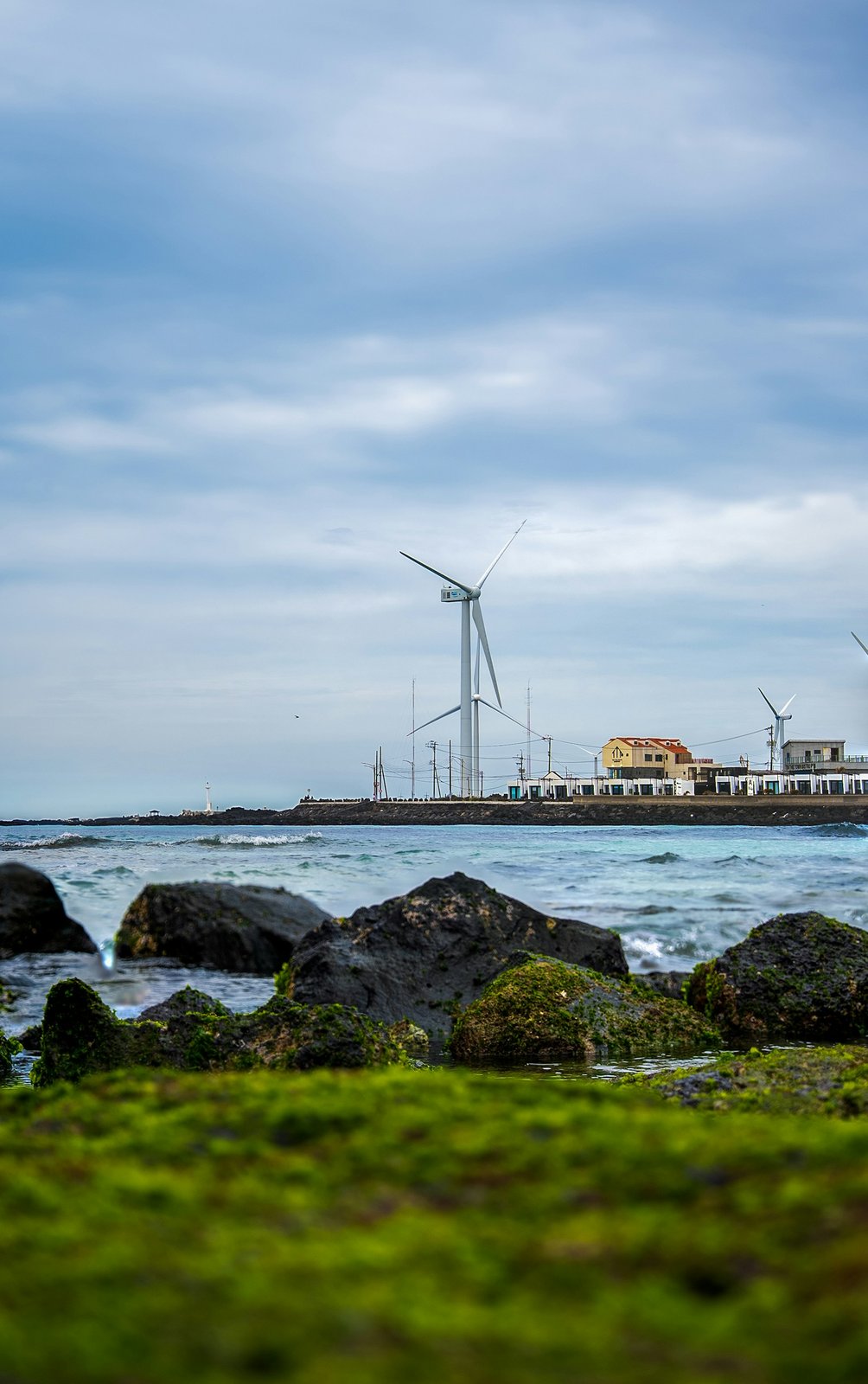
By the 1991 to 2020 climate normals, Jeju City averages 16.2 degrees over the year, against 12.8 in Seoul, with 1,502.3 mm of rain against 1,417.9. That is also warmer than Busan's 15.0 degrees in the same table. The normals table has no figure for Seogwipo, and we did not find official wind or typhoon statistics, so we say only what the photo shows: the island is building for wind.
Hospitals and loneliness
This is the hardest part to write. Jeju residents often go to the mainland for treatment. A 2026 report counted 145,054 such patients in 2024, with 244.8 billion won in medical bills and, once flights and hotels are added, an estimated total above 300 billion won. A rule change in 2026 separates Jeju from the Seoul region for the designation of top-tier general hospitals. The plan aims for care to start in January 2027, but designation is not guaranteed. For a student with a long-term condition, check before you come which hospital on the island can treat it.
Loneliness has no statistic, so this is our judgment. With 837 foreign students across the three universities we counted, your circle on campus will be small, and your friends from Seoul are a flight away. Many people do well on the island. Its popularity as a place to live for a while is real: a 2026 provincial programme offering month-long stays in certified farm guesthouses had 178 teams apply for 50 places, before 100 were finally chosen. But a month is not a degree. If you come for longer, build a routine early: a class, a club, a regular café.
A week on Jeju and a year of study on it are different things.
The honest ledger
| Gains | Costs | Source |
|---|---|---|
| Warmer than Seoul and Busan: 16.2 degrees a year | Wind and typhoon risk not measured here | KMA normals 1991-2020 |
| Many foreign residents: 5.74% of the population | Few students among them: 1,524 | Ministry of the Interior, 2024 |
| Busiest air route in the world to Seoul | Fewer flights and seats in 2026 | Press report, Jul 2026 |
| Small classes and graduate study at Jeju National University | Few universities: 837 foreign students at three | Ministry of Justice data, 2026 (our tally) |
| International school cluster, a fifth school by 2028 | Teacher pay and visas unconfirmed | Press report, Apr 2026 |
| Bus fares frozen since 2014 | No subway; current fare unconfirmed | Press report, Feb 2025 |
| A year's rent paid once, no monthly bills to chase | A large lump sum at the start | Press report, 2019 |
| A rich local language to hear | Parcels cost more: 2,534 won vs 443 won (2021 data) | Press report, Jan 2022 |
| A top-tier hospital possible from 2027 | 145,054 residents went to the mainland for care in 2024 | Press report, Apr 2026 |
Each row pairs a gain and a cost on the same subject. The language point is covered in our regional Korean article.
The island also speaks its own language. Jeju language, with endings and words very different from standard Korean, was classed by UNESCO in December 2010 as critically endangered, the last step before extinction. Our regional Korean article in this issue explains what you are likely to hear, and why the standard Korean you learn in class will still work everywhere.
The numbers, with their labels
- Foreign residents in Jeju (Ministry of the Interior, 1 Nov 2024)
- 38,714 (5.74%); workers 12,361, students 1,524
- Foreign students at Jeju National University (Ministry of Justice data, 30 Jun 2026, our tally)
- 512, of whom 208 in graduate school
- Gimpo-Jeju passengers, IATA ranking (2025)
- About 13.3 million; world's busiest airport pair, second year
- Flights Jeju to Gimpo (June 2026)
- 3,022, down 343 on the year
- Visa-free stay, tourism or transit only (Jeju Special Act, Ministry of Justice notice)
- Up to 30 days, Jeju only
- International schools in the English Education City (2025) and the next one (2026 report)
- 4 schools, 4,144 pupils; fifth due August 2028
- Residents treated on the mainland (2024)
- 145,054 people; 244.8 billion won in bills
- Average temperature and rainfall, Jeju City (KMA normals 1991-2020)
- 16.2 degrees; 1,502.3 mm
The bus fare, yeonse rents and the language school fee are left out because we found no current official figure.