Seoul's public transport is the easiest thing in the city to love and the hardest to describe honestly, because the rules change faster than the guidebooks. Fares rose in June 2025. One of the most talked-about passes stopped on 1 October 2026. A new one started on 1 September. We, the Haeyo teachers, checked each claim below on 17 October 2026, labelled where it came from, and left out what we could not confirm.
First, the card in your pocket
Nobody pays cash if they can help it. The usual answer is a transport card, commonly called a T-money card, which you tap on entry and, importantly, on exit. Most people buy one at a convenience store or a station machine and load it with cash, and many also use a phone-based version or a bank card that carries the same function. Which phones and banks work changes, so ask at the counter where you buy it or check the app store. We give no list because we could not source a current one.
Why does this matter on day one? Because the tap on exit is not a courtesy. It is how the system ends your trip, calculates the distance and applies the transfer discount. A single-journey cash ticket exists but costs 100 won more than the card fare on the subway, and you will have a card in your pocket anyway.
The subway: how to read it without panic
The subway is the backbone, and its base fare for a card is 1,550 won, in force since 28 June 2025. The same official table lists 900 won for teenagers, 550 for children, 1,650 for a single-journey cash ticket, and 1,240 for the early-morning band from the first train to 06:30. Seoul Metro has said in media reports that covering its costs would need a much higher fare, but that analysis is not a decision and we found no further rise confirmed for 2026.
Distance matters. The base fare covers the first 10 kilometres, and beyond that a small amount is added for each further five kilometres. The exact surcharge is on the city's fare page, and we recommend reading it once rather than trusting a summary, ours included.
The tap on the way out is the part of the system that does the arithmetic.
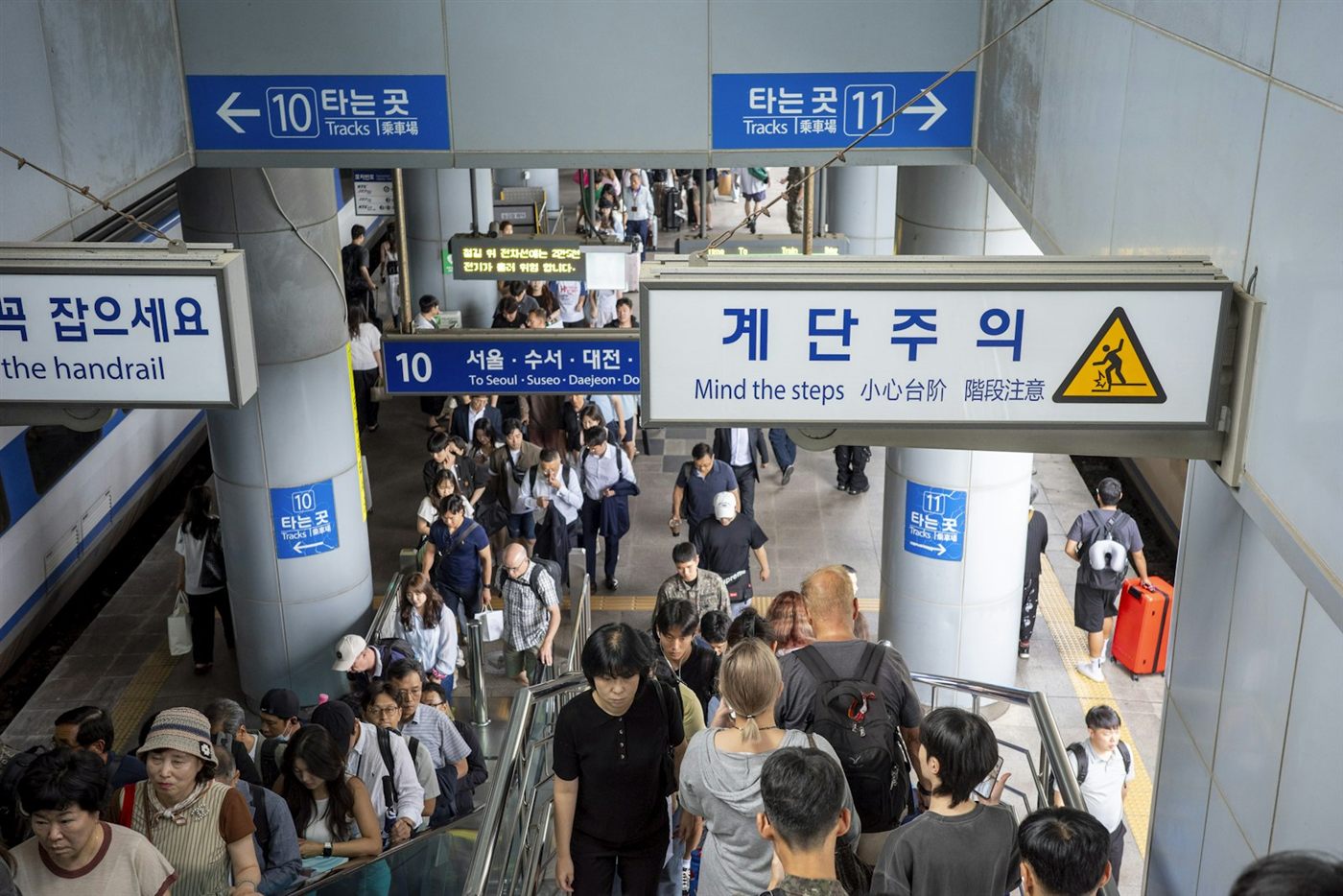
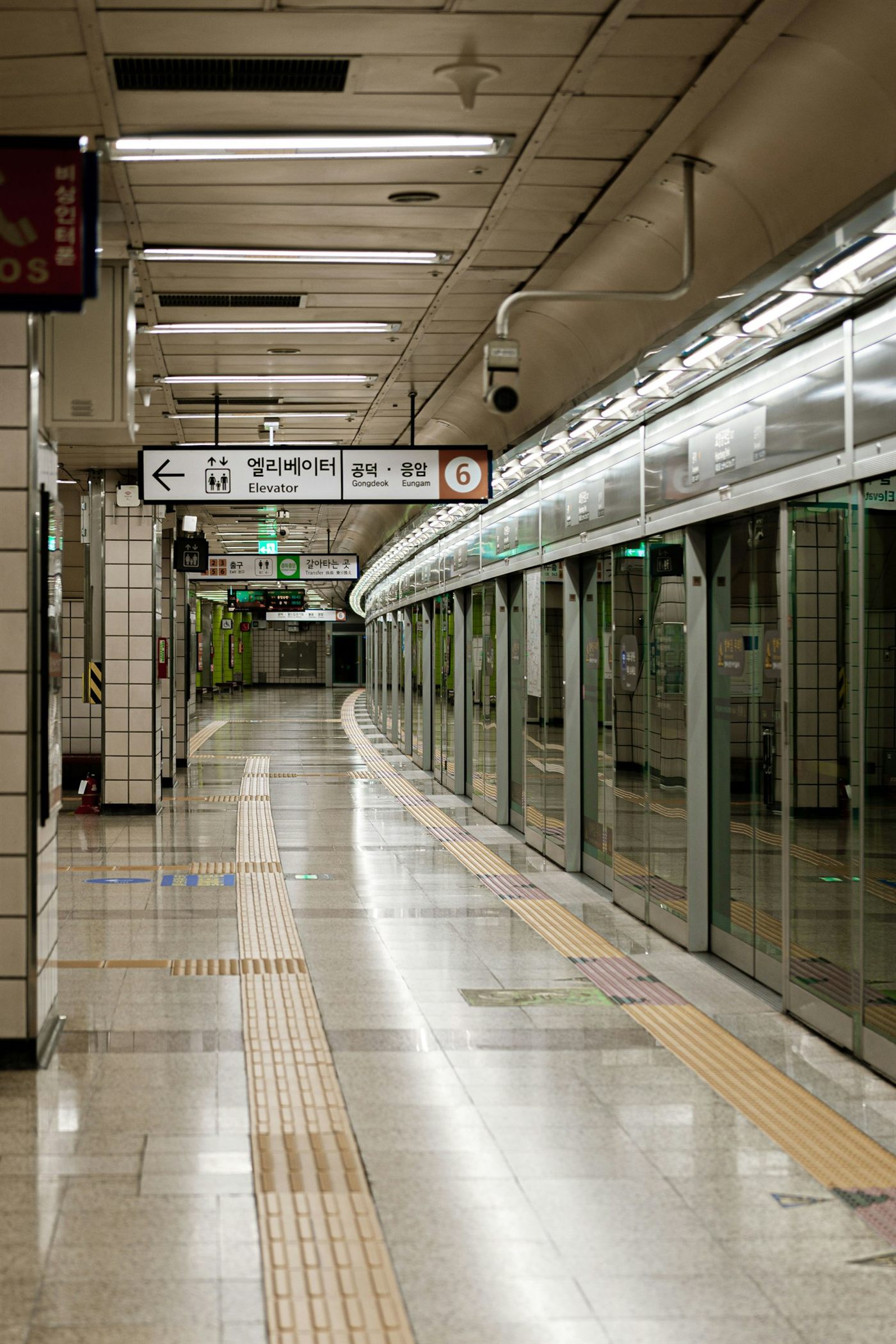
Our general orientation, which is not a sourced fact: the lines are numbered and colour-coded, and the signs inside stations repeat the number and colour. Some lines run across the whole city and out into the suburbs, some circle the centre, and a few are run by different companies. The city's English subway page confirms that the operators differ by line, and that Line 1 is shared between Seoul Metro and Korail. For exact routes, use the official map and an app on your phone rather than any memory of ours.
The practical lesson is simple. Before you board, decide your direction by the name of the last station on the line. The platform signs show it and so do the train announcements. This is the single most useful skill, and it will take you about a week to master.
Changing lines: the one rule that saves money
Transferring inside a station needs no extra gate. The city's English guide states that you can transfer to another line within the station without passing through the gate again, following the colour of the line you want. If the signs look confusing, follow the colour.
The fare side is where students lose small sums. As the city describes it, a transfer is counted if you tap in again within 30 minutes of getting off, extended to 60 minutes for rides between 21:00 and 07:00. Up to five modes can be chained, you must tap when you get off every mode, and the base fare is the highest of the fares among the modes you used. Boarding the same line again does not count as a transfer. The distance surcharge applies past 10 kilometres. The 30-and-60-minute detail and the five-mode limit are also in blogs, so please check the city page for any change.
Buses: three kinds, one habit
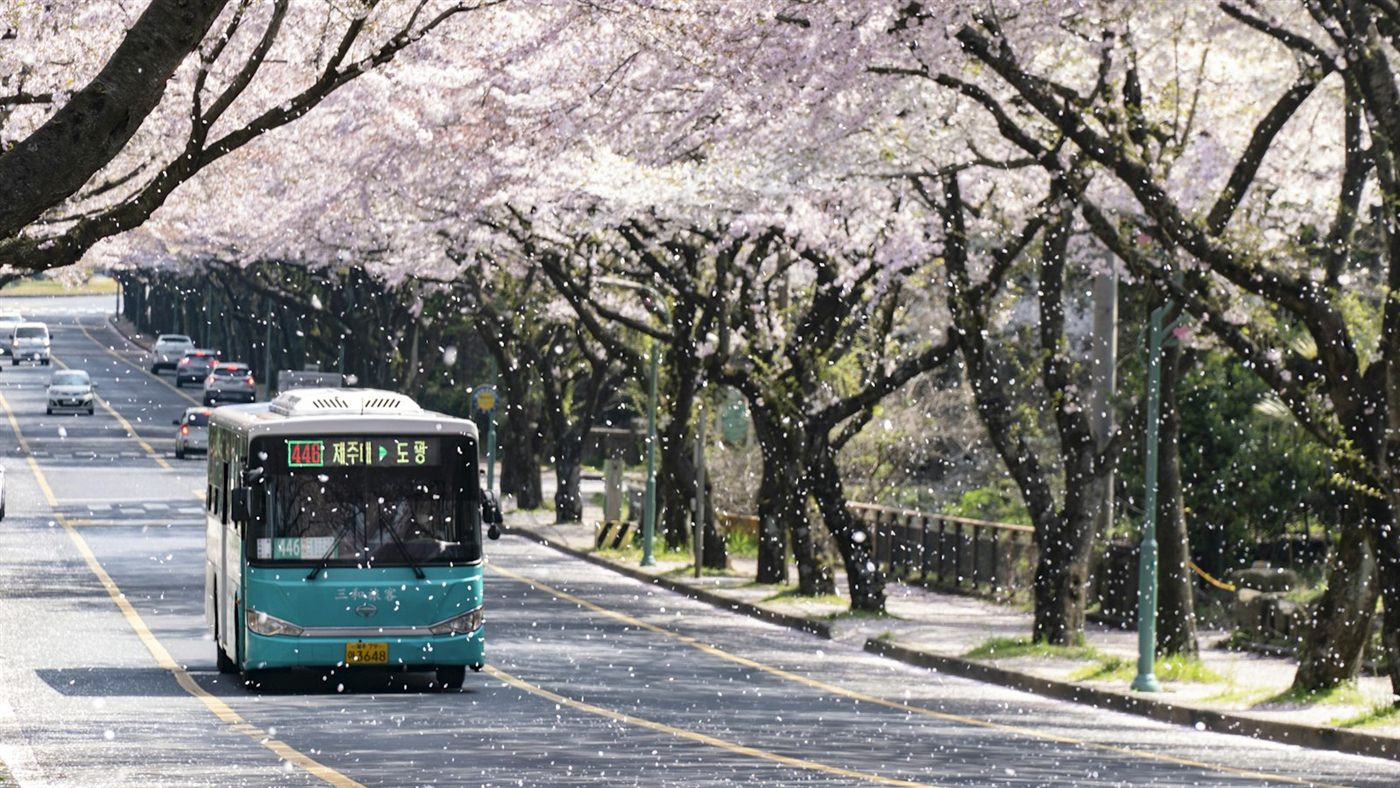
Seoul's city buses come in kinds: the 간선 (trunk) buses and the 지선 (feeder) buses cover the main routes, and the small 마을버스 (village buses) run local loops through neighbourhoods and up the hills the subway skips. At the 2023 fare level, the card fare for a trunk or feeder bus was reported at 1,500 won for adults, and village buses at 1,200 won. We did not find a newer confirmed change, but please check the city page before you rely on the number.
The habit is the same as on the subway: tap when you board and tap when you leave, so the transfer is recorded. On the bus, keep a hand on the pole; drivers move in a way that rewards balance. A screen at the front usually shows the next stop. Press the button when you hear your stop, not after.
After midnight: the 올빼미버스
The subway sleeps. The 올빼미버스, the owl bus, does not. The city page lists 14 routes and 140 buses, running between 23:00 and 06:00, with each route's own hours lasting roughly from 23:10 to 04:10, and a card fare of 2,500 won. That is the number to carry in your head: a late night costs 2,500 won by bus instead of a taxi fare.
There is one thing we could not confirm: how transfers work on owl buses. The page above does not say. Do not assume the ordinary transfer discount applies.
Taxis: the safety net, with a surcharge
A taxi is the fallback, and it is easy to call. The best-known taxi app is 카카오T. We did not verify the current call fee or the app's current terms for foreign users, so we will not quote them. What blogs report about the meter, and we could not confirm against the city's official notice, is a base fare around 4,800 won for the first 1.6 kilometres, with 100 won added for each further 131 metres.
The night surcharge exists, and a media explainer describes it as running from 22:00 to 04:00, at 20 percent in general and 40 percent between 23:00 and 02:00. The explainer did not state a year, so check the sign inside the cab and the meter before you rely on it. Keep a transport card or some won as backup in case your phone or app fails.
따릉이: the public bicycle
Seoul's public bike scheme, 따릉이, is the cheapest way to cross a district on a sunny day. The city's official page, edited on 10 March 2026, lists a one-day pass at 1,000 won for one hour of each ride or 2,000 won for two hours, with a seven-day pass at 3,000 or 4,000 won, a 30-day at 5,000 or 7,000, a 180-day at 15,000 or 20,000 and a 365-day at 30,000 or 40,000. Overtime is 200 won per five minutes. The fares were reported held in 2025. Please re-check on the city's page before paying.
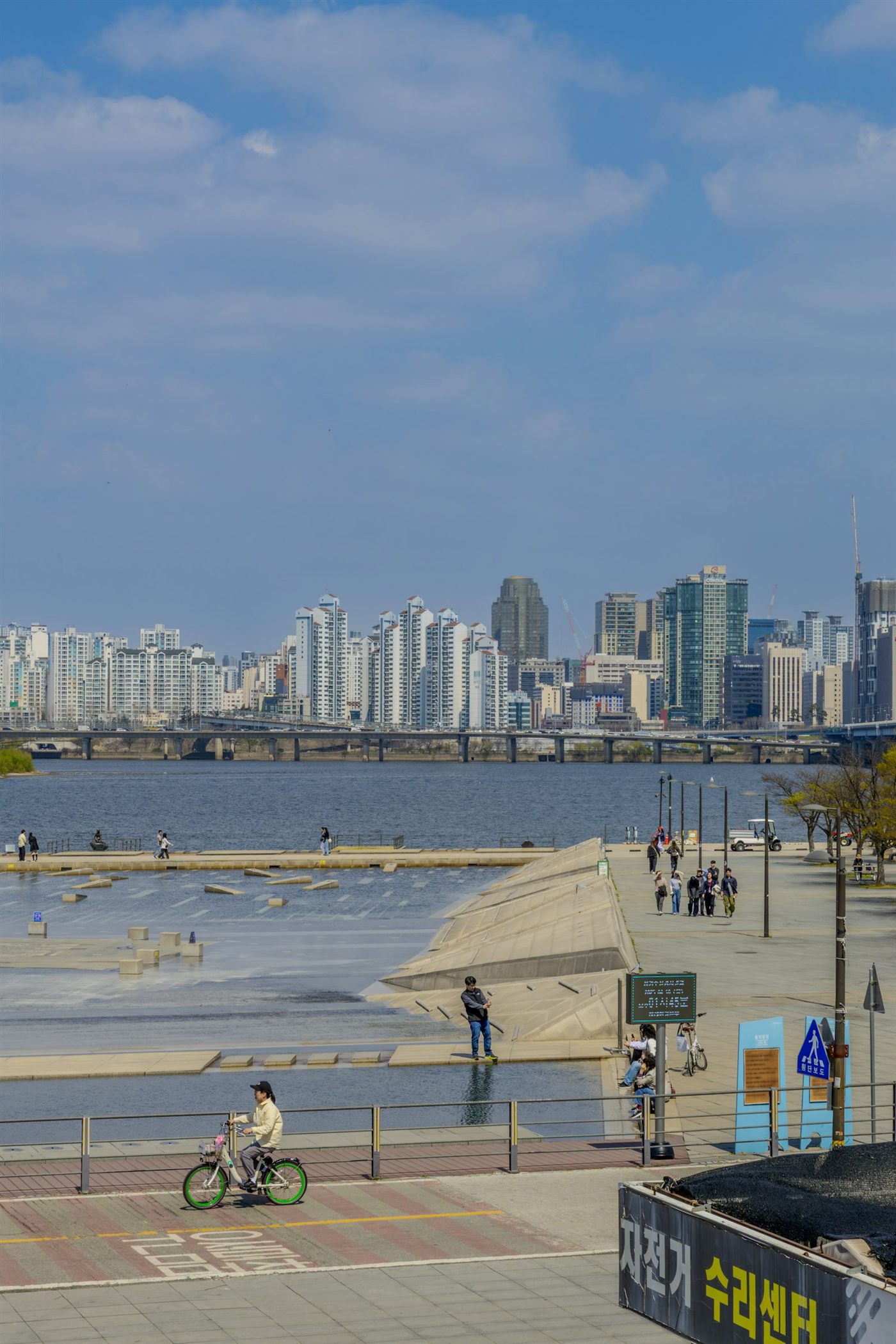
Two practical points. Renting needs the app, and sign-up may need a phone number and a payment method; because we have not verified the current rules for foreign users, test it with a Korean friend or teacher in your first week. Second, bike lanes are not everywhere; waterfront paths are the most comfortable routes, and a busy city street is another matter.
To and from the airport
Two routes are widely used: the airport railroad (AREX) and the airport limousine buses. Our research found sources that disagree on the AREX direct-train fare, with figures of 11,000 won and 13,000 won in different places, and we could not open the official fare table, so we give no AREX number; read the airport railroad's own fare page. For the 6001 airport bus, an operator page and a blog list the fare as 17,000 won; one blog also says that boarding at Terminal 2 needs an advance ticket from March 2026, which we could not confirm.
Our advice is boring and safe: before you fly, choose your route by where you are going, check the official page for the fare, and save your destination address in Korean on your phone. A driver or a ticket window will read it faster than you can explain.
Which map app?
Many residents use Naver Map or Kakao Map for walking and transit directions in Korea, and both have Korean-language interfaces. Many travellers also try Google Maps. We could not find a source that tells us what Google Maps cannot do in Korea, so we will not claim a limit. Our advice is practical: install a Korean map app in your first week, set the language to English if you like, and compare its routes with the app you already know. When two apps disagree about a bus, check the stop sign itself.
What changed in 2026, and what it means for you
What replaced it? The same city page names two successors: the K-Pass-based system called 모두의카드, introduced in January 2026, and a separate Seoul pass, the 기후동행패스, started on 1 September 2026, with Seoul extras such as bikes and cultural venues. The city describes the refund model as use first and be repaid later, so you do not buy a monthly pass up front.
The refund rules are the part we want to be careful about. A news report and a blog summarise them for the Seoul area: a basic refund rate of 20 percent, 30 percent for people in the youth category, aged 65 or over or with two children, a fixed-amount option with a reference sum of 62,000 won for the general category, and at least 15 trips a month to qualify. The blog gives more detail that we cannot verify. These are media and community sources, not the government's own page.
And the most important sentence: we did not confirm whether a foreign resident can join, or what documents are needed. The programme's official site, korea-pass.kr, is where to look. Until you have read it, do not plan a budget around a refund.
A one-minute checklist for your first week
Card
Get a transport card or enable a phone version. Tap in, tap out, every time.
Subway
1,550 won on the card for a base trip. Choose direction by the end-station name; transfer inside the station.
Bus
Tap on boarding and exit. Trunk and feeder buses were reported at 1,500 won, village buses at 1,200 won.
Night
Check your last train. The owl bus costs 2,500 won and runs 23:00 to 06:00. Do not assume a transfer discount.
| Mode | What we could confirm | Source type |
|---|---|---|
| Subway, card base fare | 1,550 won since 28 June 2025 | official |
| Subway, cash single ticket | 1,650 won | official |
| Trunk/feeder bus, card | 1,500 won (2023 level) | media/community |
| Owl bus, card | 2,500 won | official |
| Ddareungi, 1-day pass | 1,000 won (1 hour) or 2,000 won (2 hours) | official |
| Taxi base fare | About 4,800 won, not checked against the city notice | community |
| AREX direct fare | Not given; sources conflict | unverified |
Checked 2026-10-17. Re-check any amount on the city's page before you pay.