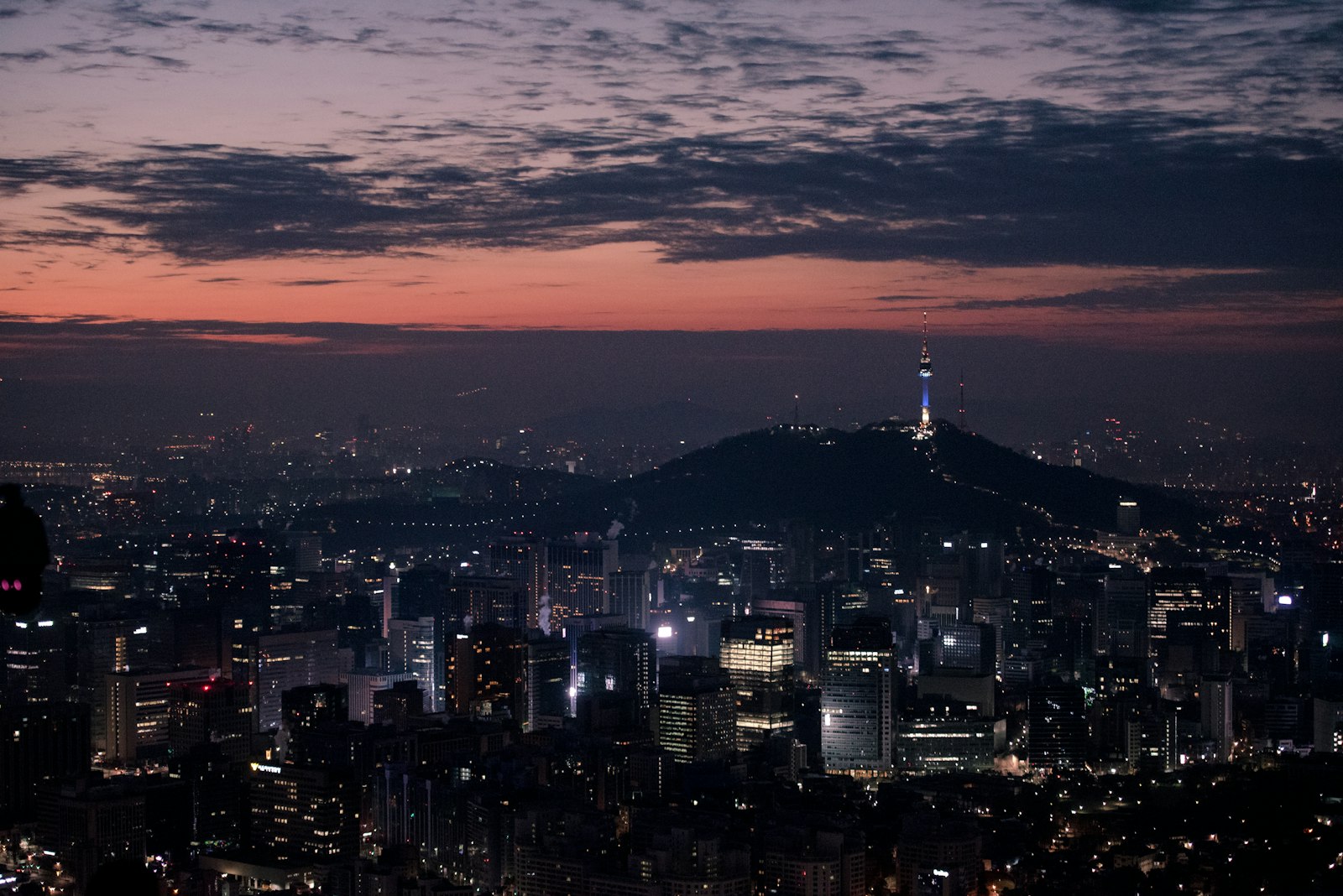
Sunday, a little before seven. The Dobongsan subway station is already full of people in hiking boots and bright windbreakers, and nobody is talking much. They are all heading for the same thing: the granite spine of Bukhansan, a national park of 76.9 square kilometres that sits inside the city limits. The highest point, Baegundae, is 837 metres. From the first proper viewpoint, the city you have just left lies flat below you, a grid of apartment blocks with the Han River cutting through it like a seam.
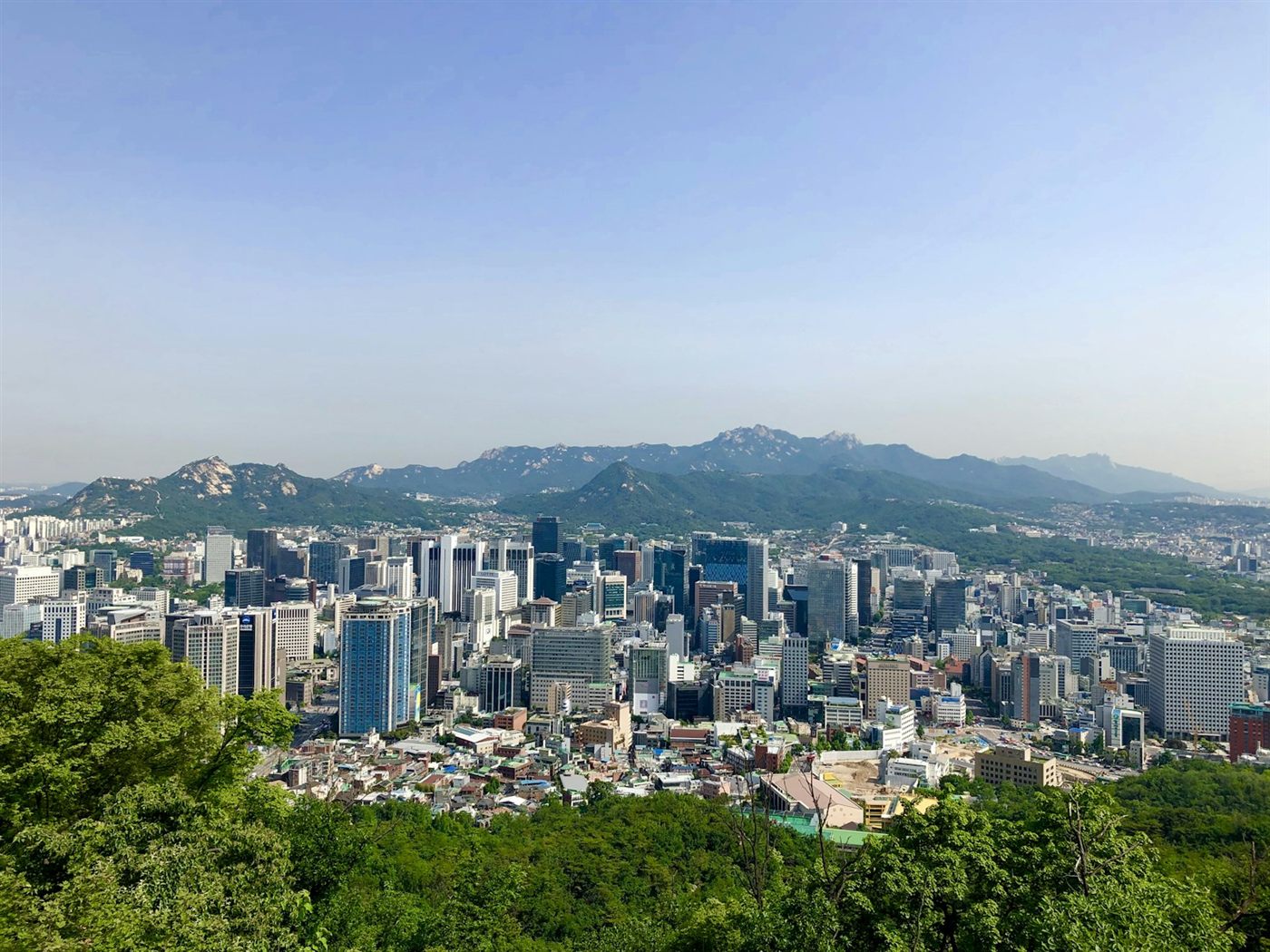
Stay on the trail long enough and you will notice who is walking it. A retired couple with matching poles. Three university students sharing a thermos and arguing in two languages about which way the next marker points. A foreign exchange student photographing his shoes on the rock so he can prove, later, that he really did this. The first course of the Seoul Trail starts near that station and runs roughly 6.3 kilometres; you do not need a car, a guide or a plan beyond the train fare.
Most visitors do not expect this part of Seoul. They expect neon, convenience stores and a queue for fried chicken, and all of that exists. What the brochures skip is that the same city lets you be on a mountain trail before most people have finished breakfast, and back at a desk, a library or a language class by afternoon. That combination is one of the reasons we, the haeyo teachers, think a lot of students are about to be surprised by where they chose to study.
This issue is about why they are choosing it, what it actually costs, where to look if Seoul is too much, and which parts we would not sugar-coat. Every number in it carries a source link and a label: official, media, community, or unverified. Where we could not confirm a figure, we say so.
Why students are choosing Seoul now
In July 2025, QS published its Best Student Cities ranking and put Seoul first for the first time, ahead of Tokyo and London. London had held the top spot for six years. A year later, in July 2026, the 2027 edition put Seoul first again, with 100 points to Tokyo's 98 and London's 97.3, across 150 cities. Note the edition years: it is the 2026 and 2027 editions, released in consecutive Julys. In the 2027 edition Seoul led the university-rankings indicator, ranked second on employer activity behind Tokyo, and 23 Seoul universities appear in the QS World University Rankings.
Number one overall does not mean cheapest. Seoul placed 68th on affordability.
That second part matters, because it keeps the headline honest. The same QS ranking put Seoul 68th on affordability. Seoul is the top student city by QS's blend of university quality, employer links, desirability and more. It is not the cheapest, and Korean students themselves are struggling with housing costs, as we will get to. It is cheaper than London or Paris; that is a narrower claim, and it is the one we can defend.
Seoul in the ranking
- QS Best Student Cities, 2026 and 2027 editions
- No. 1 both times (first time in 2026)
- Seoul universities in QS World University Rankings
- 23
- QS affordability rank, Seoul (2026 edition)
- 68th
- Korean cities in the 2027 edition
- 5: Seoul 1, Daejeon 67, Busan 120, Daegu 132, Gwangju 144
The government numbers tell the same story from the other side. The Ministry of Education counted 253,434 international students on 1 April 2025, up 21.3% on the year before. The Ministry of Justice counts differently, by residence status (D-2 degree students plus D-4 language trainees), and reported 305,329 at the end of August 2025, the first time that count passed 300,000. That was two years ahead of the government's own Study Korea 300K target for 2027. These two series are not interchangeable, and we will not mix them.
Nor is it only Seoul. Chungbuk province reported 14,303 international students in April 2026, up 35.7% from 10,537 a year earlier, and the Gyeongbuk region was reported up 39.4% in 2026. Provincial universities facing a shrinking number of Korean eighteen-year-olds are recruiting abroad hard, and that is also why some regional campuses are offering better dormitory and scholarship terms. It has a downside: the same regional press reports students leaving partway and visa rejections, which is why the "honest part" of this issue is not a footnote.
Who are these students? Taking the Justice Ministry's end-of-August-2025 count, which includes language trainees: Vietnam 107,807, China 86,179, Uzbekistan 18,155, Mongolia 17,870, Nepal 15,515 and Myanmar 8,903. These figures are from August 2025 and should not be read as the current mix.
In September 2026 the Financial Times published a piece headlined "Seoul is the new Paris for university students living abroad." We could not open it; it is behind a paywall, so we are working from Korean press coverage of it, and we are not repeating any rent figures attributed to it, because Korean outlets disagree about whether the article gave any. What the coverage agrees on is the argument: students are weighing a city's lifestyle, cost and ecosystem alongside a university's name. The head of NAFSA, Fanta Aw, reportedly told the paper that American students with no family tie to Korea are now choosing Seoul, which used to be unusual.
One more signal, from our own desks. Interest in the language itself keeps rising. The number of people taking TOPIK, the Korean proficiency test, went from about 360,000 in 2022 to about 550,000 in the first nine months of 2025, with overseas test-takers up from 64,000 in 2020 to 282,000 in 2025. Duolingo ranked Korean the sixth most-learned language on its platform in 2025. We are not neutral observers of that trend, but the numbers are not ours.
The city itself
Take away the rankings and ask what living in Seoul is like day to day, and the first answer is: unexpectedly physical. Palaces and hanok (한옥, traditional Korean houses) sit a few subway stops from glass offices. On Namsan, the hill in the middle of the city, the walking route is about 4.2 kilometres and takes around three hours, according to the national tourism organisation. Seoul's tradition is not behind glass and a ticket line only; it is part of the ordinary route home.
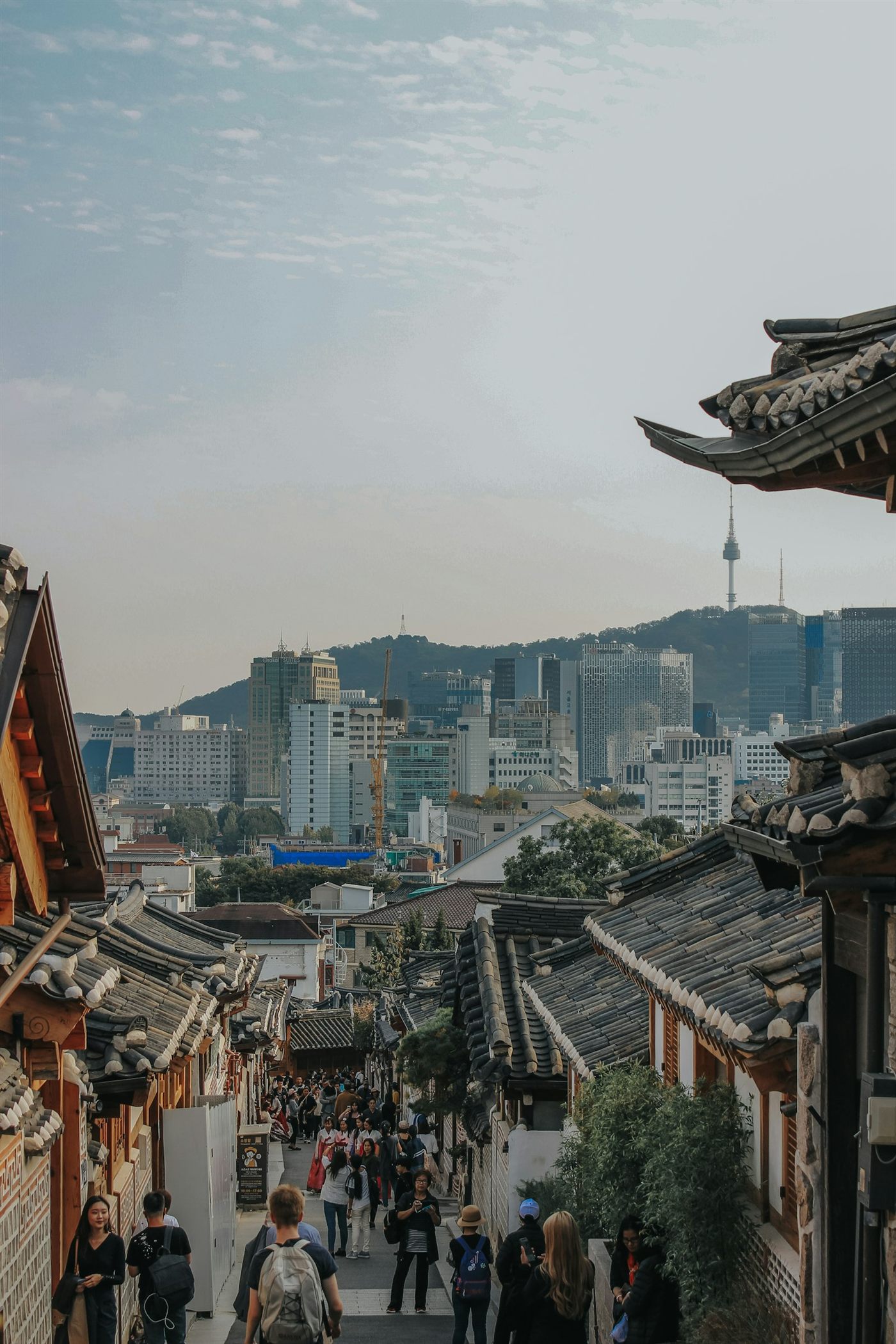
Then there are the mountains. The Seoul Trail, or Dulle-gil (서울둘레길), is a loop of about 157 kilometres around the city, first announced in 2015. A 2024 revamp, called Seoul Trail 2.0, re-cut it from 8 courses into 21 shorter ones, with starts and ends at 23 subway stations. That redesign matters for students: a trail with a subway exit at each end is something you can do in a free afternoon with a train card and a bottle of water, without a weekend plan.
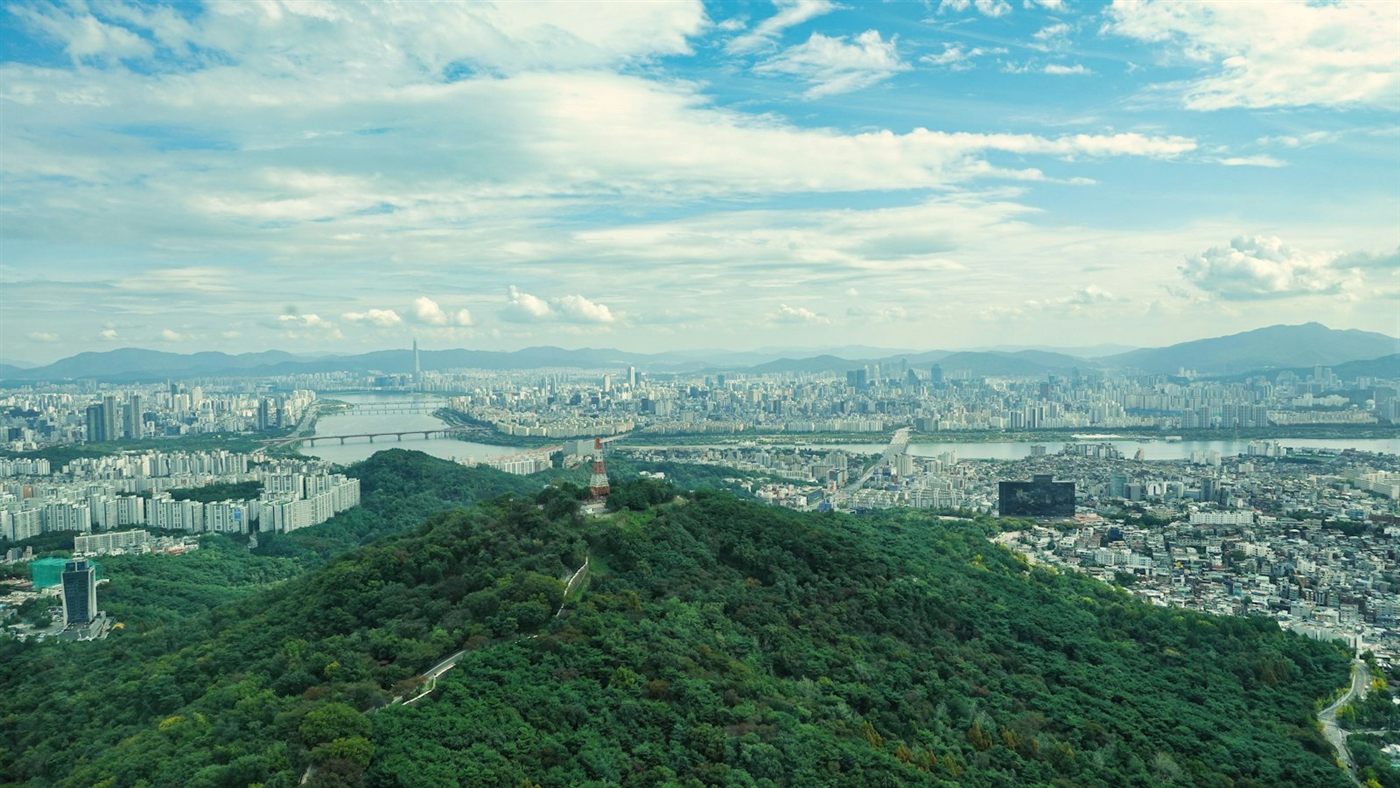
A 157 km trail loops the city, and the trailheads are subway exits.
Food, for a student, is a daily budget decision before it is culture. Everyday Korean eating leans on banchan (반찬, small side dishes), namul (나물, seasoned vegetables), soups and fermented kimchi. The OECD's Health at a Glance 2025 gives Korea a life expectancy of 83.5 years, 2.4 above the OECD average. About 36% of adults are overweight or obese, the second lowest in the OECD after Japan, according to the Korean health ministry's reading of the data. We are tempted to credit the food. The honest version: diet may be one reason, and no study shows it. An observational BMJ Open study of 115,726 people found men who ate napa-cabbage kimchi up to a few times a day had about 10% lower obesity prevalence (women about 8% lower), while five or more servings a day went the other way, and observational studies cannot prove cause.
Safety and movement are the other quiet advantages. Numbeo, a crowd-sourced survey index, puts Seoul's Safety Index around 75 out of 100 (it is opinion, not police data). Cafes and convenience stores stay lit late, and the subway reaches almost everywhere: Wikipedia counts 24 lines and 656 stations across the metropolitan network, and lines 1 to 8 carried about 2.42 billion riders in 2024. Wikipedia is community-edited, so read the counts as approximate. One caution on transport costs: Seoul's 30-day climate card ended on 1 October 2026, per Korean media, and whether its replacement covers international students is unconfirmed. And the old line that Korea has the world's fastest internet is out of date: Ookla's August 2026 median fixed speed put Korea 22nd, at 251 Mbps, with mobile ranked 6th.
What it costs
Here is the first thing to settle. "Cheap" in Seoul means cheap compared with London, Paris and Sydney, not cheap for a Korean student on a part-time wage. Both statements are true, and the Korea Times ran an article on 11 February 2026 about students squeezed into cramped housing, with the rent index for multi-unit housing at a record high in December 2025.
| City | 1-bedroom, city centre (USD/month) |
|---|---|
| New York | 4,411 |
| Singapore | 2,930 |
| Sydney | 2,524 |
| Paris | 1,553 |
| Tokyo | 1,278 |
| Seoul | 887 |
Numbeo, crowd-sourced, snapshot date unknown. We found no London figure. Treat as a rough comparison, not a quote.
For an actual student in Seoul, the numbers are in won. Studios in university areas average roughly 625,000 to 710,000 won a month according to community blogs, and near Ewha, the Korea Times reports 700,000 to 900,000. A deposit (보증금, bojeunggeum) is paid on top, as a lump sum returned when you leave. We found no reliable figure for it and will not print one: get the amount in writing from the school or landlord before you send any money.
Tuition is where Seoul looks much better. The national average for four-year Korean universities is about 7.27 million won a year, roughly USD 5,400. Yonsei listed foreign undergraduate tuition in 2025 at about 4.3 to 8.7 million won per semester, depending on the major. One guide lists US public universities at USD 20,000 to 50,000 a year, UK universities at GBP 15,000 to 38,000 and Australia at about AUD 20,000 to 45,000. These ranges vary widely by school and the guide is a community source. Korean fees for foreign students have also been going up, as Vietnamese media reported, so check this year's schedule rather than last year's.
Cost snapshot (all approximate)
- Seoul 1-bedroom, city centre (Numbeo)
- USD 887 per month, against Paris USD 1,553
- University-area studio, Seoul
- about 625,000 to 710,000 won per month
- Average four-year tuition, Korean universities
- about 7.27 million won per year
- Foreign undergraduate tuition at Yonsei (2025)
- 4.3 to 8.7 million won per semester
A student month, built only from labelled ranges: if you live in a language-programme dorm at roughly USD 700 to 900 per three months (an agency figure dated 2022, updated 2024), housing is about USD 230 to 300 a month. Forty meals at USD 3 to 6 comes to USD 120 to 240. A prepaid phone is USD 30 to 40. That sums to about USD 380 to 580. Choose a goshiwon (고시원, small private room) at USD 400 to 500 instead and the same month runs about USD 550 to 780. Health insurance (about 79,000 won a month in one undated article; unconfirmed) and transport come on top in won. These are planning frames from agency articles that are old, not quotes; verify every line with your school.
Beyond Seoul
If Seoul's rent makes you wince, the QS list itself points elsewhere. Four more Korean cities appear in the 2027 edition. Daejeon came in at 67th, its first entry and the highest Korean city after Seoul. Busan is 120th (117th the year before), Daegu 132nd (131st) and Gwangju 144th, also a first entry. They are far below Seoul, but they are in a ranking of 150 cities, and the cost and the pace are different.
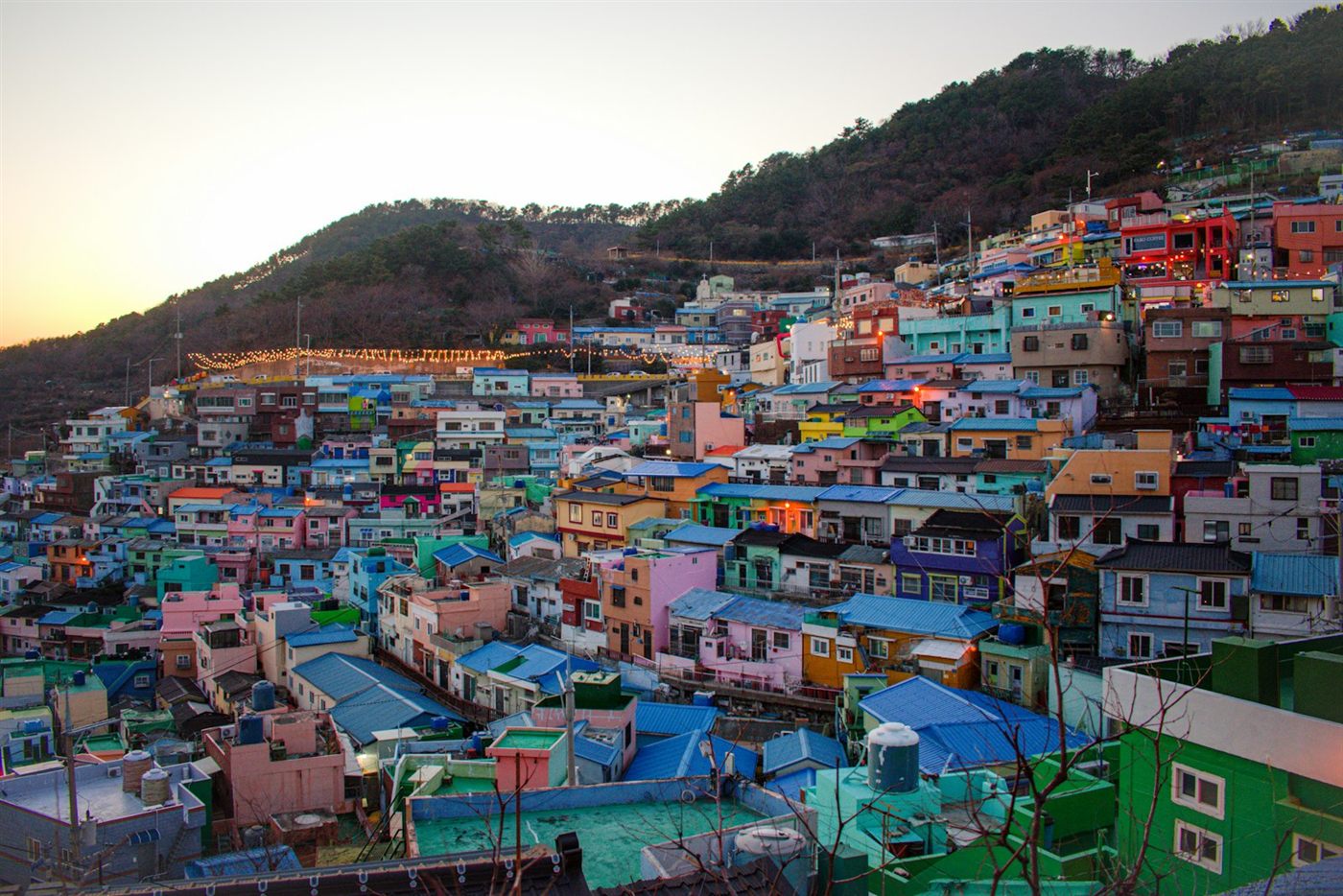
Busan is the sea. It is the second city, with beaches, a port and film culture, and one guide puts rent about 20 to 30% below Seoul's. Deposits there are often 3 to 5 million won against about 10 million in Seoul, according to community blogs; treat that as unverified. The trade-offs are fewer jobs, fewer English-language services, and a smaller transit system. Regional visa pilots exist, and the Korea.net page on them is an official source.
Daejeon is the science town, home to KAIST, and the one regional city that looks like Seoul in miniature for researchers. Rent is described as notably affordable in a blog, but we found no figure (unverified). It is small, and the options are narrower outside STEM; we could not verify which language institutes there are best.
Daegu is the low-cost option, with one community table putting monthly living at 450,000 to 700,000 won (unverified). Gyeongbuk students were reported up 41.7% in 2025, so the international cohort is growing. Summers are hot and the foreign community is small. Gwangju is the arts-and-democracy-history city, budget-friendly according to a guide, with fewer foreigner services and a small job pool. Its cost estimate, a shared table of 1.0 to 1.6 million won a month with Daegu, is also from a blog and unverified.
There is also Chungbuk, around Cheongju, the fastest-growing area in the figures we have, with a target of 20,000 international students by 2027, early-stage services, and, in the same press, reports of dropouts and visa rejections in Chungcheong. A growing region is a bet. Ask the school what support it actually gives international students, in writing.
Language institute prices outside Seoul, for what they are worth from agency listings, run about 1.1 to 1.4 million won per ten-week term, against roughly 1.5 to 1.9 million in Seoul. That is a price range from agencies, not an official tariff.
The honest part
We would be bad hosts if we told you only the good news, so here is the short list of what students told journalists, what the statistics say, and where we could not find numbers. A full set of community voices, clearly labelled as unverified, is in this issue's companion article, "What people say."
Loneliness. Korea's first national loneliness survey found 38.2% of people say they feel lonely; we found no separate figure for foreigners. In Korea Times interviews with international students (a small sample, method unpublished), Seoul came across as a city where everyone competes for the same limited space and services, and where help from universities with language, housing and settling in can be thin, so students find the information themselves.
Housing and deposits. Official figures count 40,936 recognised victims of jeonse fraud as of 31 August 2026, 547 of them foreign (1.3%), and the Korea Times reported that foreigners are excluded from some of the state's relief programmes. Do not sign a lease or send a deposit without a Korean-speaking person reading the contract with you.
Treatment. In the 2024 immigrant survey, 17.4% of residents reported experiencing discrimination, and overall life satisfaction was 4.3 out of 5; the 2022 survey had put discrimination at 19.7%. Both numbers are real, which is why we do not wave away either.
A wider-lens reading: InterNations' Expat Insider 2025 ranked Korea 44th of 46 countries overall, with workplace culture in the bottom three and personal finances 40th, though healthcare and fast-internet access scored well. It surveys expats generally, not students, so treat it as context.
The language institute is a two-year stop, not a destination.
The two-year cap. Study on a language-trainee visa (D-4-1) is generally limited to about two years at a language institute. Korea University and Sungkyunkwan both publish attendance conditions: below 70% attendance an extension can be refused at SKKU, and Korea University requires 90% average attendance for part-time work. Ordinary private language schools do not qualify for the D-4-1 at all. These rules change; check the school's own page and HiKorea.
Visa stress. Immigration offices work by appointment, not every status can be renewed online, and receiving your application receipt does not mean approval. Our guides on visas and part-time work cover the rules; this article's job is only to say that the stress is real and starts early. For now: confirm every visa fact on HiKorea or with the embassy, not from us and not from a forum.
How to start
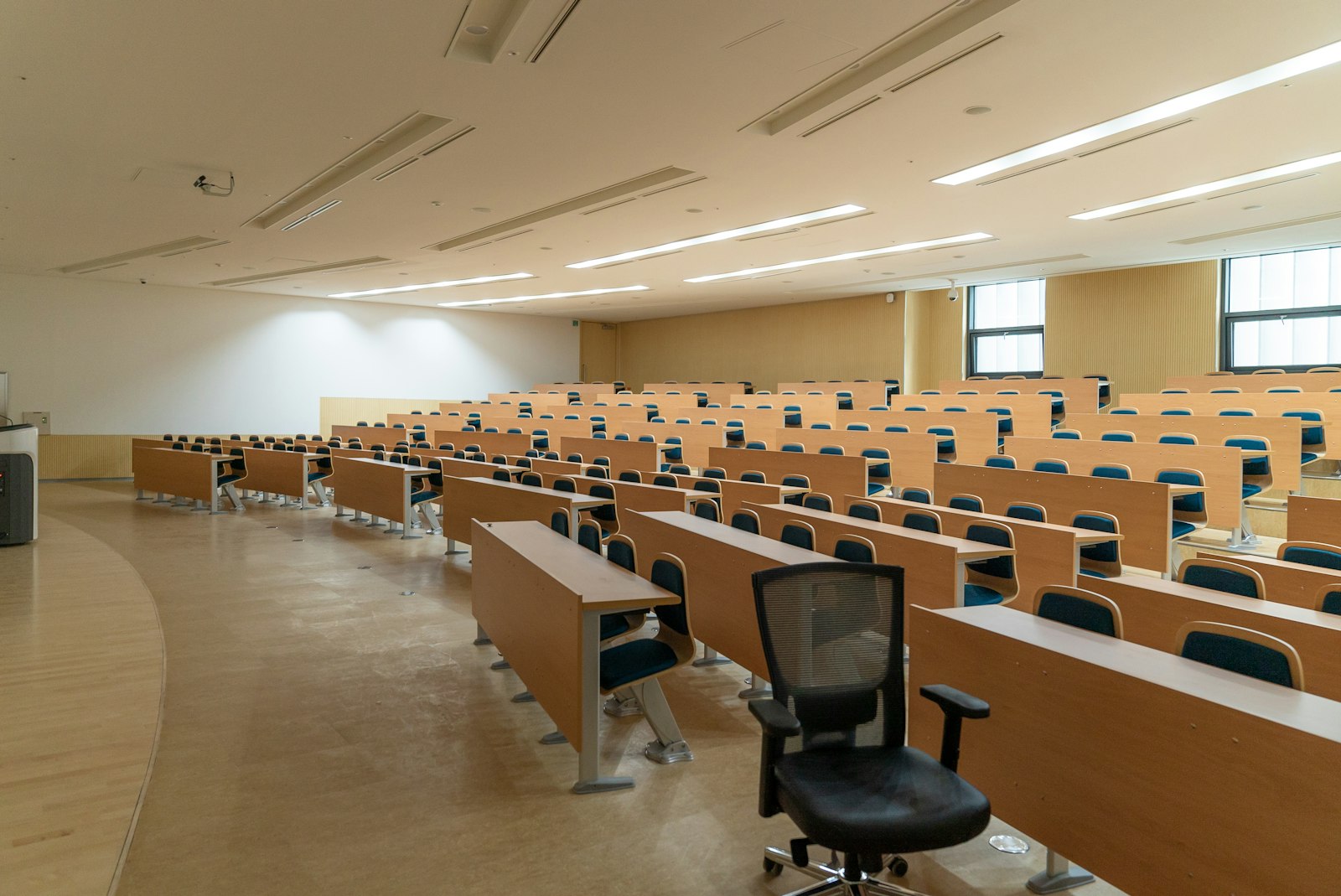
The path most students take begins with a university Korean language institute, a 어학당. Most run four terms a year of about ten weeks, around 20 class hours a week, or roughly 200 hours per term, in six levels. Finishing all six takes about a year and a half. Applications usually open two to four months before a term, and popular sections close early. Ewha, for instance, lists a 10-week intensive term at 1,850,000 won plus a 120,000-won admission fee, with insurance included. Across Seoul, agency listings put a term at roughly 1.5 to 1.9 million won.
Here is what we see in our own classes. The level of Korean you arrive with changes the first six months more than almost anything else. At zero, you are placed in Level 1, spend weeks on letters and greetings, and the city is mostly a menu you cannot read. At the end of the first level you can order, ask the price and read a sign. That is the change we would like you to get on your own timetable, before you land, and it is the reason our course starts at the alphabet. No institute, ranking or course of ours guarantees a visa, admission, a job or residency.
Entry tests and visa proposals use levels too. Korea's TOPIK exam can raise your points or your allowed work hours, but it is not a visa requirement. Proposals reported in October 2026, such as waiving some financial-proof requirements for TOPIK or KIIP level 4, come only from blog coverage and have not been enacted. Universities often ask for TOPIK 3 for degree admission, and some employers want TOPIK 6, according to a Korea Times piece that says it was written with AI assistance. So treat all of these as directional, not as rules.
For degree students, there is GKS, the Global Korea Scholarship run by NIIED under the Ministry of Education. Undergraduate applicants go through an embassy track or a university track, and for the 2026 intake applications ran September to October 2025. Graduate applications for 2026 ran through the embassy in February. Benefits include airfare, tuition, a year of language training, a monthly stipend and insurance. We will not print stipend amounts, because the only figures we found came from third-party guides rather than the official guideline, and no acceptance rate has been published that we could find. Check dates every September and February.
A last practical piece of advice: a dorm often costs less up front and spares you the deposit problem, but spaces are limited and go first come, first served. Compare the total bill, including insurance and the application fee, not the headline tuition.
Back on the mountain
Come down from Bukhansan around noon and you meet the Sunday crowd coming up. The trail head is a street of small restaurants, steam on the windows, bowls on every table. You have been walking for hours and your Korean is still bad. You point at a stew on the next table, say the one word you know, and the owner, who has done this ten thousand times, laughs and brings it.
The people at the next table ask where you are from. You will not understand half of what they say, and it will be one of the best things you do that week. Seoul has a lot of room for students now, and it keeps offering more. It rewards the ones who learn a little of what the city says back.
- The 어학당 guide
- Visas in plain words
- Working while you study
- A student month in Seoul, in won and dollars
- Scholarships: GKS and beyond
- After graduation, honestly
- Teaching English in Korea (E-2): the honest version
- Seo-Yeon-Ko and friends: the university rhymes, explained
- What people say: the hard parts of living in Korea
- Why Korea, why now
- Sources and last checked