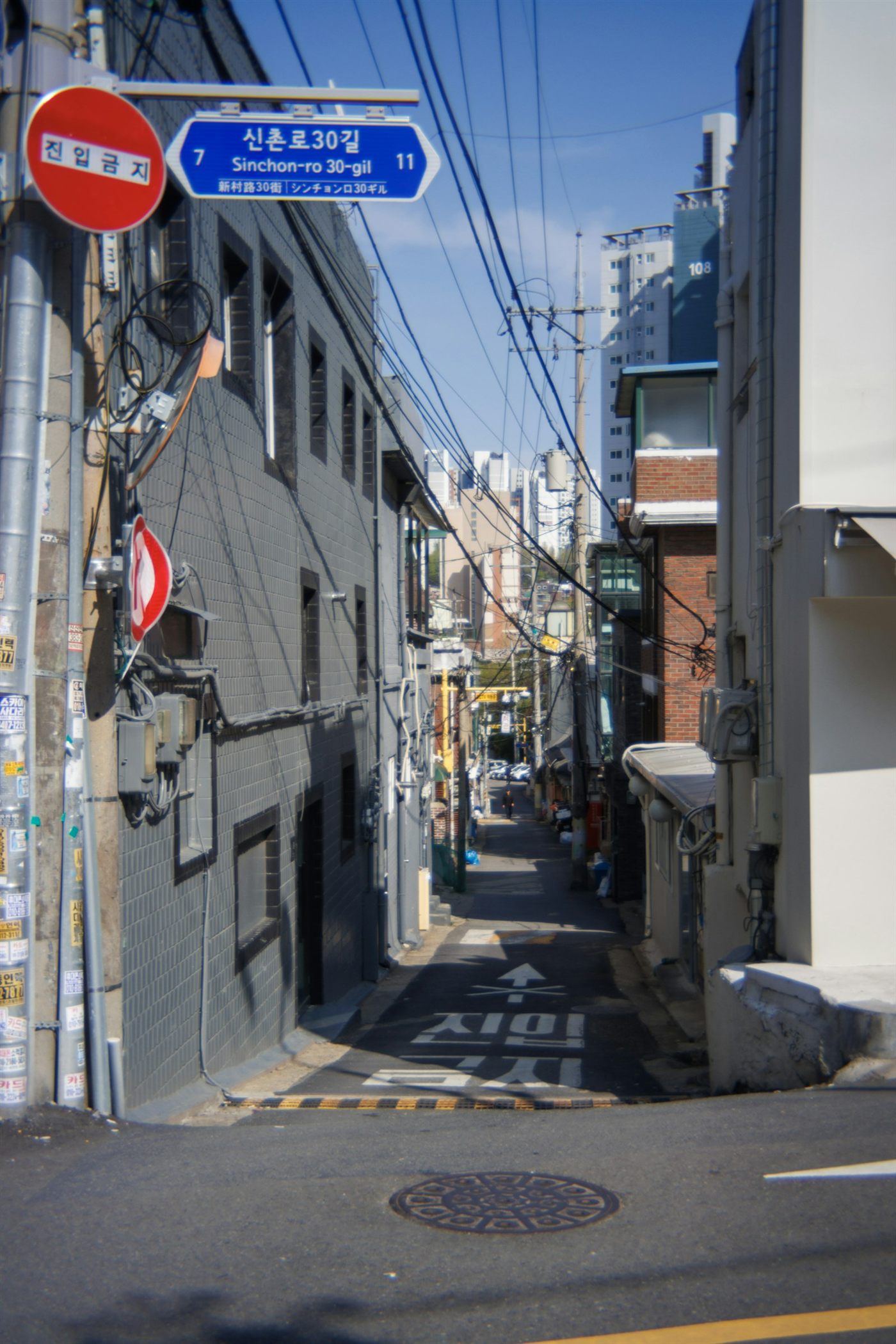
Moving day in a university neighbourhood has a sound before it has a sight: the beep of a delivery truck reversing into an alley that was drawn for walkers, then the scrape of a flat-packed wardrobe on a stairwell wall. By nine in the morning the lane is a puzzle of parked scooters, bicycles chained to railings, a sack of rice and a washing machine riding a hand trolley. Somewhere above, a landlord is explaining the door code. Somewhere below, a newcomer is holding a phone with a translation app open and a key on a ring with a plastic tag, trying to work out which of four identical metal doors on the third floor is theirs. Nobody is in a hurry, and everybody is a little in the way.
We, the haeyo teachers, have stood in that alley, and what we notice is how much of the day was decided weeks earlier: which neighbourhood, which kind of room, how much deposit, who signed what. Seoul is a city of about 9.58 million registered residents, and its universities sit in very different kinds of places, from a quiet hillside by the Han River to a neon street that never quite closes. This issue is about choosing the place before you choose the door.
How renting works: three numbers and one warning
Korean rental listings carry three numbers, and you need all of them. The 보증금 (bojeunggeum) is the deposit, a lump sum you hand to the landlord and get back when you leave. The 월세 (wolse) is the monthly rent. The 관리비 (gwallibi) is the monthly management fee, a separate bill for building upkeep that sometimes also covers water, internet or shared-area cleaning. Whether it does changes room by room, so we treat it as unverified until the contract says so. A listing that reads 1000/60 means a 10 million won deposit and 600,000 won a month, and the management fee comes on top. In Dabang's July 2026 survey of ten university areas it averaged 84,000 won, up 10.9 percent from 75,000 a year earlier.
Deposit and rent trade against each other. A bigger deposit usually buys a lower monthly rent, and the trade has a formula: for the purpose of the broker's fee, the deposit plus the monthly rent times 100 (or times 70 when the result is under 50 million won) gives the 'converted' amount. We read this in an industry association's summary and in blogs, not in the law itself, so confirm it before you rely on it.
The warning is 전세 (jeonse). Under jeonse a tenant pays one very large deposit, often most of the value of the home, and no monthly rent. Dabang's average jeonse deposit for a small multi-unit room in Seoul was about 222.3 million won in August 2026. For a student that is not a normal choice, and it is where the well-known housing scams happen: if the landlord's mortgages and other claims already add up to nearly the home's value, he may not be able to pay you back. One blog rule of thumb puts the danger zone above 70 percent of the value, but that is a blog number, not a legal line. Our own judgment, which we cannot source, is that students are usually better off with 월세 and a small deposit, or with a dorm.
What a broker may charge, and the paper check
Brokers (중개사, junggaesa) are paid a 중개보수 (jungae bosu), and for housing the ceiling is set nationally. According to Seoul's real-estate information site, for a converted amount under 50 million won the cap is 0.5 percent with a limit of 200,000 won; from 50 million to under 100 million won it is 0.4 percent with a limit of 300,000 won. Here is our own arithmetic. A room with a 10 million won deposit and 300,000 won monthly rent converts to 31 million won, so the most a broker can ask is about 155,000 won. A 10 million won deposit with 670,000 won a month, the Seoul average, converts to 77 million won, where 0.4 percent would be 308,000 won, so the 300,000 limit applies. We did not confirm the brackets above 100 million won, so open the table yourself for those. The ceiling is a ceiling: you may negotiate below it.
Then the papers. The list below comes from blogs and news explainers, not from the statute, so check each step against the official portal, and ask your school's international office, before you pay anything.
1. Read the 등기부등본
The registry extract (등기부등본, deungibu deungbon) shows the owner and any mortgages. The owner's name on it must match the person who signs. If someone signs on the owner's behalf, ask for a power of attorney.
2. Add up the claims
In a house with many tenants, ask what the others paid as deposit. Unpaid taxes may not appear in the registry at all, so ask the landlord for proof.
3. Register your address
전입신고 (jeonip singo, address registration) gives you protection from 00:00 the day after you file. 확정일자 (hwakjeong ilja, a dated stamp on the contract) counts the same day. You need both to have a place in the queue for repayment.
4. Check once more before paying the balance
Re-read the registry before the final payment, because a new mortgage can appear between signing and moving in. Keep every document.
One reported rule says that reporting the lease within 30 days of signing counts as the dated stamp. Rules like this change, so ask at the 주민센터 (community centre) or on 정부24 whether it still applies. For foreigners signing a contract, a legal-aid blog lists more traps; it is a community source and we have not verified it.
Five kinds of room, side by side
Before the map, the types. Every figure is a media or university figure, rounded, with sources named under the table. Do not compare dorm prices directly: each school counts a different term length and a different set of meals.
| Type | What you pay (media or university figure) | What to know |
|---|---|---|
| 원룸 (one-room, multi-unit house) | Seoul average 670,000 won a month on a 10 million won deposit (Dabang, Aug 2026); 710,000 in March | The default choice. Ask what the management fee covers. |
| 오피스텔 (officetel) | About 830,000 won a month, converted to a 10 million won deposit (MOLIT-reported, Mar 2026) | Newer, often with a built-in kitchen. Costs more. |
| 고시원 (goshiwon) | 200,000 to 600,000 won a month (Seoul Shinmun range). One case near Konkuk: 100,000 deposit, 380,000 a month | Small rooms, no official average. Rooms built or enlarged since 1 July 2022 must be at least 7 sq m with a window to the outside. |
| 셰어하우스 (share house) | Roughly the 400,000s a month, unverified | We could not trace the source, so we leave it unverified. |
| 기숙사 (dorm) | Yonsei Sinchon single room, about 2.6 to 3.22 million won a term; Korea University Frontier Hall, 1.685 million (spring 2026); Konkuk Cool House, 2.456 million (2025) | These are per-term prices, not monthly, and meals and term dates differ. |
Dabang prices cover rooms of 33 sq m or less with a 10 million won deposit. MOLIT-based rents are converted to the same deposit at a 5.8 percent rate. The methods differ, so do not mix the two sets.
The goshiwon deserves two more sentences. They fill up: one report said goshiwon in Sinchon were full by early August this year as rents in university areas climbed. And the safety rules are recent, which is a reason to look at the window and the fire exit yourself instead of trusting a listing photo.
The districts
Below are twelve areas students keep asking us about. For each one: a rent figure with its label, how it feels, and who it suits. We deliberately do not call any area foreigner-friendly on the strength of a number, because the biggest foreign-resident districts (Guro, Yeongdeungpo, Geumcheon) are not where most students end up. In the interior ministry's 2023 count, Guro had 53,138 foreign residents (12.6 percent), Yeongdeungpo 50,424 (12.6) and Geumcheon 31,320 (12.7). Where we say something about services, it is because the city has put one of its seven Global Village Centers there, which is a place you can visit.
Sinchon and Ewha: three campuses and one long street
Sinchon is the classic university district. Yonsei, Ewha and Sogang sit within a few stops of each other, and the streets between them stay lit and loud late into the night with cafes, noodle bars and study spots. It is also the most expensive of the campus districts. In Dabang's July 2026 survey of ten university areas, the area around Ewha topped the list at an average of 767,000 won a month, with a management fee of 103,000 won, both the highest.
Who is it for? Students at the three schools, and anyone on a language-institute course nearby who wants to step out of the door into a street full of people their own age. Hongdae is within walking distance. The price is the downside, along with the competition for small rooms: we read that Sinchon goshiwon were full in early August. Lines: Line 2 at Sinchon and Ewha, plus the Gyeongui-Jungang line (unverified, check the map). Rent: media, Dabang.
Hongdae, Hapjeong and Yeonnam: the street that does not sleep
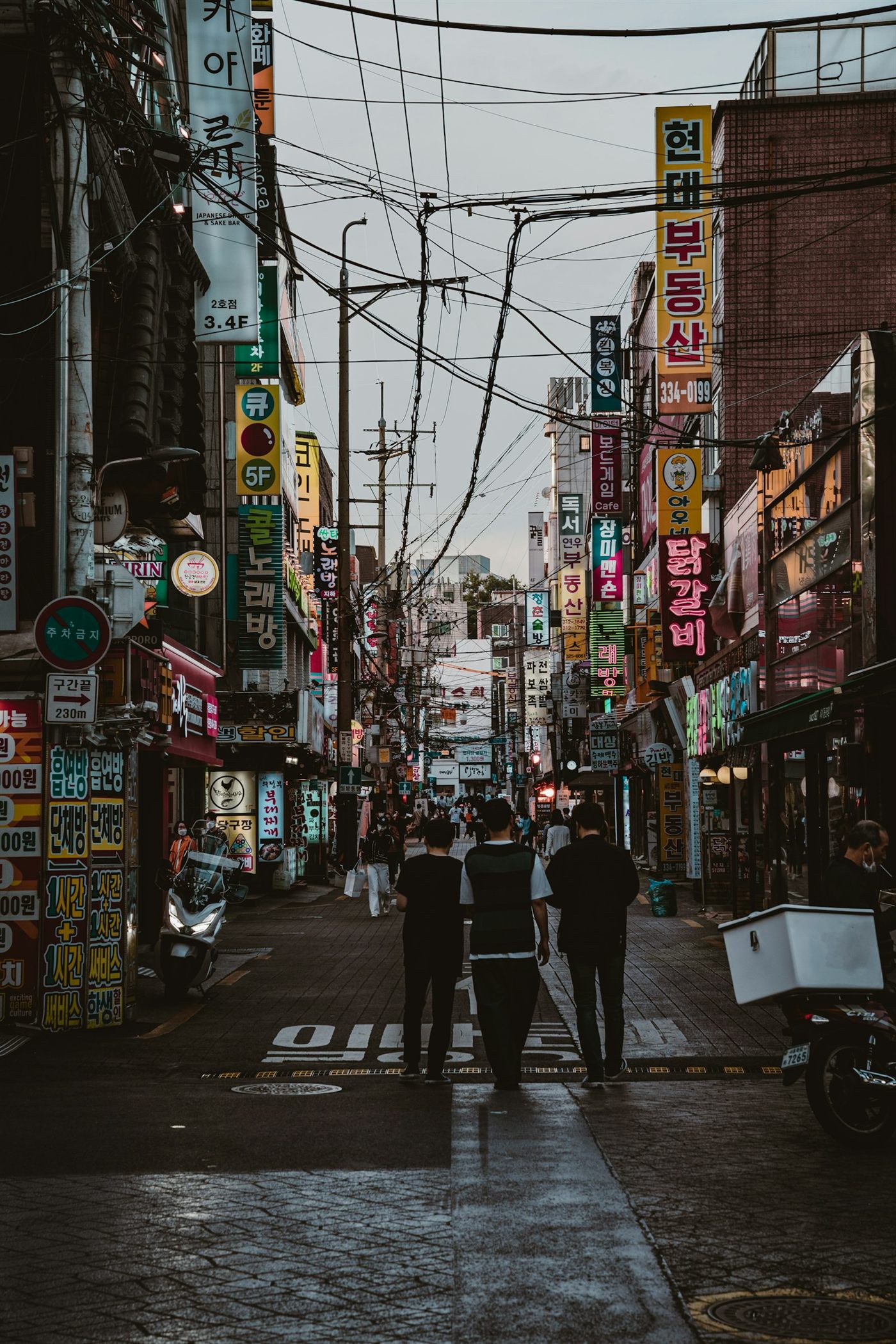
Hongdae grew up around an art school and has never really calmed down: street performers, clubs, record shops, late queues for fried chicken. Rents for individual neighbourhoods here are missing, so we use the district. Mapo-gu sat at about 106 percent of the Seoul average in February 2026, which on a base of 670,000 won works out to roughly 710,000 won (our arithmetic on a media figure).
Yeonnam, just up the road, has one of the city's Global Village Centers, which is an official fact. The Airport Railroad runs to the airport from Hongdae, a real advantage on arrival day and when you fly home. The costs are noise, tourists and high prices. If you need quiet to study, this is not your neighbourhood. If you want to meet people by walking out of the door, it is hard to beat. Lines: Line 2, the Airport Railroad, Line 6 at Hapjeong and Sangsu (unverified).
Anam and Korea University: a student village at the gate
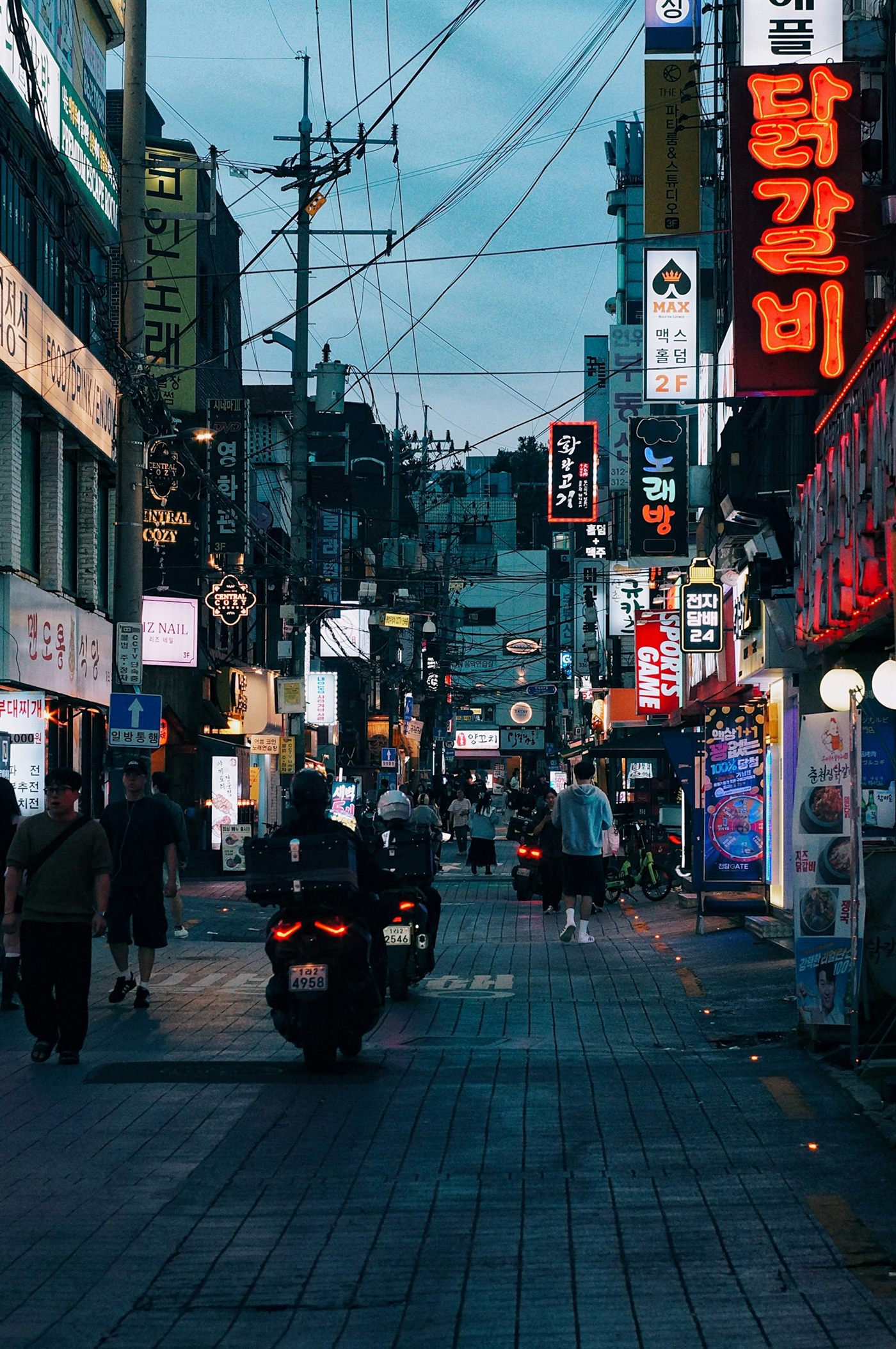
On the northern side, around Anam and Korea University, the neighbourhood is a student village in the old sense: cheap bowls of gukbap, makgeolli bars, and a campus gate where the whole street seems to start and stop with the semester. We found no 2026 rent figure. The Dabang number for Korea University in July 2025 was 599,000 won, an old figure that tells you nothing about this year's ranking, so we leave the area unpriced and mark it unverified. Line 6 serves it (unverified). The streets are hilly and the transport is simple, which suits anyone who wants to live inside their university's world and not commute out of it.
Hyehwa, Daehak-ro and Seongbuk: theatres and city walls
Hyehwa is the district of small theatres, a stretch of the old city wall and the humanities campus of Sungkyunkwan University. Of the ten university areas Dabang surveyed in July 2026, it was the only one where rent fell: an average of 550,000 won, down 4.5 percent on the year, with the lowest management fee at 59,000 won. Seongbuk also has a Global Village Center. The catch is that many houses are old, and Daehak-ro is loud on weekend evenings.
Who is it for? Anyone who wants culture on the doorstep and a lower price tag than Sinchon. Lines: Line 4 at Hyehwa and Hansung Univ., Line 6 around Bomun and Sungshin Women's Univ. (unverified).
Wangsimni and Hanyang: the interchange
Wangsimni is where several railway lines meet, and that is the whole argument for it. Hanyang University's neighbourhood, a short ride away, averaged 628,000 won in July 2026, up 9.2 percent from 575,000 the year before. Seongdong-gu overall is a very different story, which we take up under Seongsu. For students this means an easy trip to Seongsu, Gangnam or the centre without a long wait on the platform. Lines: Line 2, Line 5, Suin-Bundang and Gyeongui-Jungang (unverified).
Heukseok and Chung-Ang: the quiet one by the river
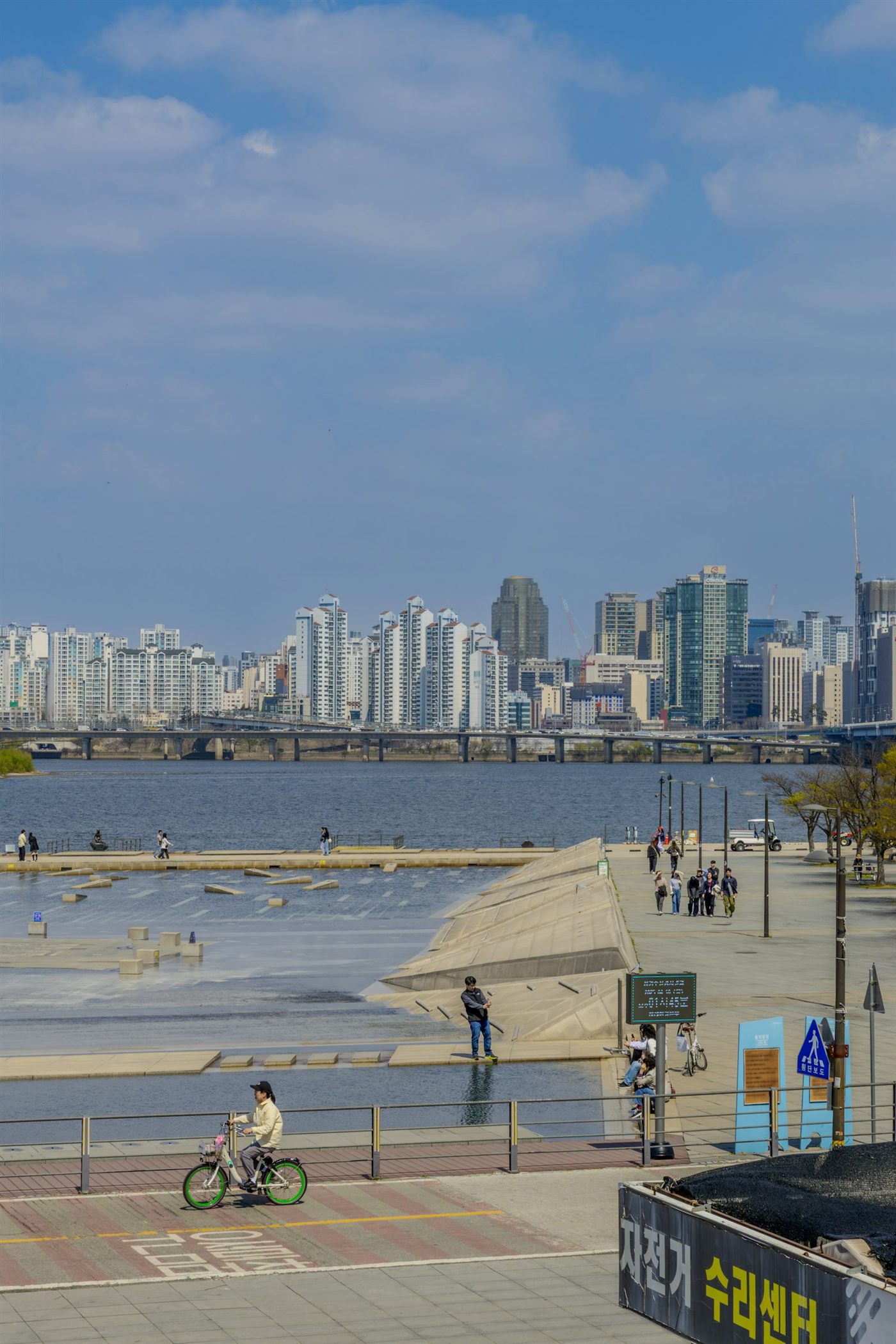
If the budget is tight, look at Heukseok. The area around Chung-Ang University had the lowest rent of the ten surveyed in July 2026, 522,000 won on average, though management fees there averaged a high 102,000 won, so compare totals and not headlines. It sits by the Han River on a hill, with redevelopment under way. The weakness is transit: Line 9 is the main way out (unverified), so a trip across the city takes planning. It suits students who do not mind being slightly apart, and who want the river for evening walks.
Hoegi, Kyung Hee and HUFS: the language campus
Hankuk University of Foreign Studies is the language school of Korea, and its neighbourhood shows it. The average rent near HUFS was 670,000 won in July 2026, a 15.1 percent jump from 582,000 a year earlier, one of the sharpest rises in the survey. For Kyung Hee University we only have a 2025 figure (634,000 won), which we do not use to rank it. Dongdaemun-gu, which covers the area, averaged 760,000 won in Dabang's March 2026 count. Lines: Line 1 at Hoegi and Oedae-ap, plus the Gyeongui-Jungang line (unverified). Students tell us that Line 1 runs late, but that is a community impression and not a measured fact.
Gwanak, Seoul National University and Sillim: the one-person capital
Gwanak-gu has the highest share of one-person households of any Seoul district, 62.6 percent by a media count (62.7 in the district's own figure), while Seoul as a whole stood at 39.9 percent in 2024 against 36.1 percent nationally. You see it in the street: blocks of one-rooms, snack counters open late, laundry on shared lines. The average near Seoul National University was 533,000 won in July 2026, among the lowest, but up 26 percent from 423,000, the biggest jump of the ten.
The district has also put RFID food-waste bins in dense one-person areas, one for every 60 households, according to the press. The 2023 interior-ministry count gave Gwanak 29,112 foreign residents, 5.9 percent. Lines: Line 2 at Seoul National Univ., Nakseongdae and Sillim (unverified). Expect hills and some semi-basement homes, and community posts mention night noise.
Konkuk University Station: two lines and a busy square
Konkuk's gate is one of the easiest to reach, with Line 2 and Line 7 crossing at the station (unverified). A newspaper reported in August 2026 that most one-rooms there carried a deposit of 5 to 10 million won and rent of 650,000 to 700,000 won a month, and described a goshiwon at a 100,000 won deposit and 380,000 a month. Gwangjin-gu had 24,570 foreign residents, 7.1 percent, in 2023, and a lane of Chinese restaurants. The trade-off is noise and rents above the Seoul average. It suits students at Konkuk and Sejong who want convenience over calm.
Gangnam and Yeoksam: where people work
Gangnam is not a student district; it is where students go for internships. It is also Seoul's most expensive: Dabang's average one-room rent there in March 2026 was one million won a month, though the figure moves a lot from month to month. MOLIT-based conversions for March put multi-unit housing at about 1.04 million and officetels at 978,000 won. Yeoksam has a Global Village Center. Who is it for? Working people. Small rooms are scarce, and on a student budget it is the first district to rule out.

Yongsan, Itaewon and Haebangchon: the international quarter
Itaewon and Ichon each have a Global Village Center, two of the seven in the city, so Yongsan is a place with a record of services for foreigners. Imported groceries, a mosque and restaurants from many countries are within a short walk. Dabang's Yongsan average was 840,000 won in March 2026, and MOLIT-based figures for the same month were 993,000 won for multi-unit homes and 1.07 million for officetels. It suits people who need to be understood in English or want the food of home. The hills of Haebangchon are steep, and prices are high. Lines: Line 1 and Gyeongui-Jungang at Yongsan, Line 6 at Itaewon (unverified).
Seongsu: pop-ups, start-ups and the highest rents
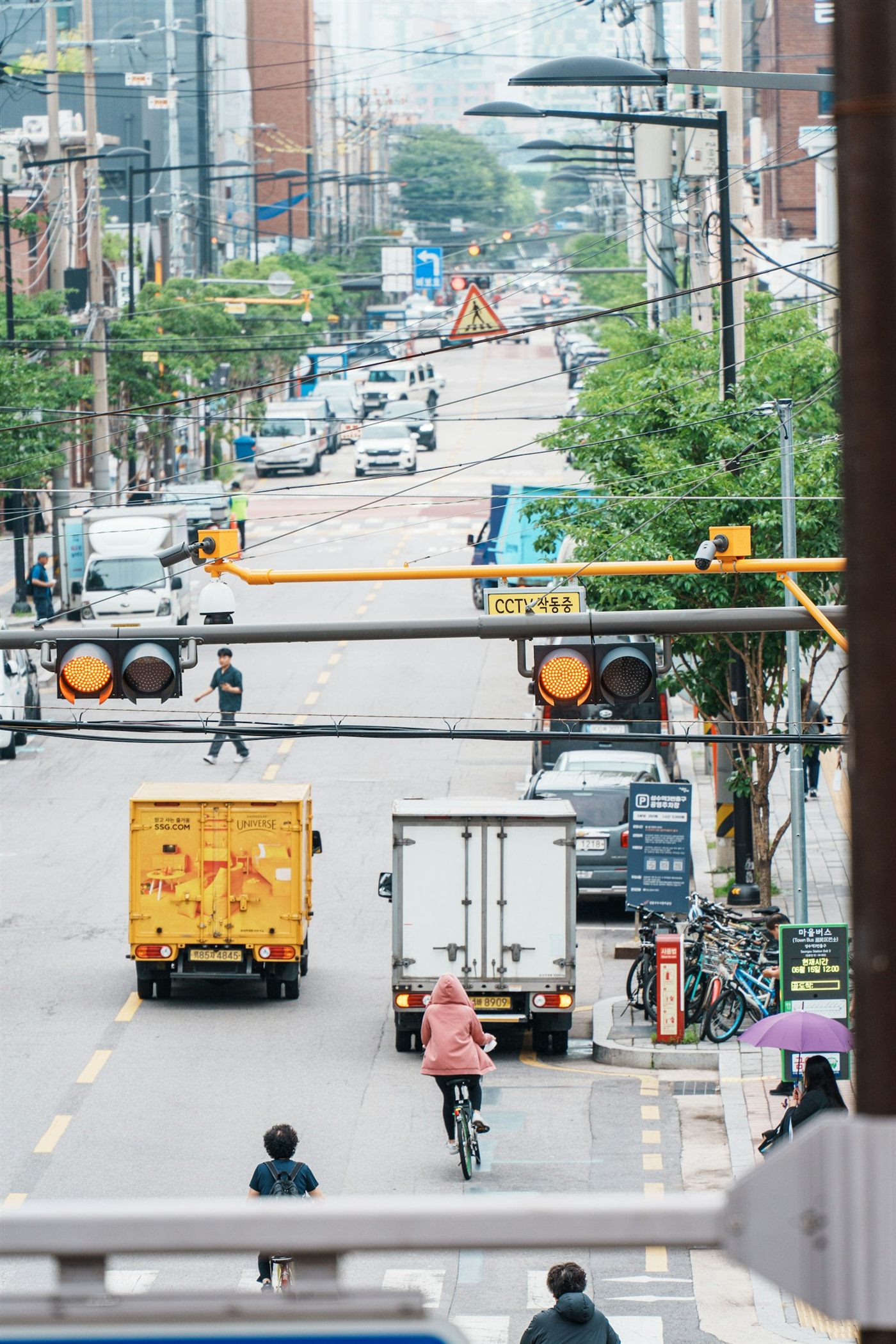
Seongsu is a former factory district that became a neighbourhood of pop-up stores, cafes, workshops and start-ups. It is expensive. MOLIT-based rents for Seongdong-gu multi-unit housing averaged 1.095 million won in March 2026, the highest in Seoul, though new buildings pull the average up. Dabang's Seongdong figure for that month was 860,000 won. One of the foreign-resident centers is in the district. It is a place for people with jobs, and you will pay for the weekend crowds. Line 2 serves it (unverified).
Getting around, and what changed on 1 October
Where you live decides how often you tap a card. The standard subway fare is 1,550 won with a transit card, in force since 28 June 2025; we found no later rise. Transfers inside the allowed window are discounted. The owl buses run from 23:00 to 06:00 for 2,500 won, which matters in a district where classes end late and the last train has gone.
The numbers, with their labels
- Seoul average monthly rent, small multi-unit room, 10 million won deposit (Dabang, Aug 2026)
- 670,000 won (March: 710,000)
- Ten university areas, average monthly rent (Dabang, Jul 2026)
- 625,000 won, up 7.7% on the year; management fee 84,000
- Seoul, MOLIT-reported multi-unit and officetel rents, converted (Mar 2026)
- 856,000 and 830,000 won
- Seoul one-room median, MOLIT data, Nov 2025 to Oct 2026 (secondary tally)
- 500,000 won a month on a 10 million deposit, management fee excluded
- One-person households, 2024: Seoul and Gwanak-gu
- 39.9% and 62.6%
- Standard subway fare with a card
- 1,550 won
Notice the gap between the average (about 670,000 won) and the median (500,000). The average is pulled up by expensive new buildings and by listings that stay online longer, while the median tracks what people actually signed. That is why a room can feel cheaper than the headline, and why it makes sense to bargain from the median down and not from the average up. The median comes from a secondary website, so treat it as a clue and not as a quote.
Choosing: three questions
How will you get to class at nine?
Live where one line, not two, does the job. A room that is 25 minutes from the gate can cost more in tiredness than it saves in rent.
What is the total, every month?
Add the management fee to the rent before you compare. A 500,000 won room with a 100,000 won fee costs the same as a 600,000 won room with none.
What do you want outside the window?
Some students want a lit street at midnight. Others need the quiet of the hills. Visit at night before you decide, and ask the broker to show you the room on the day you will actually live there.
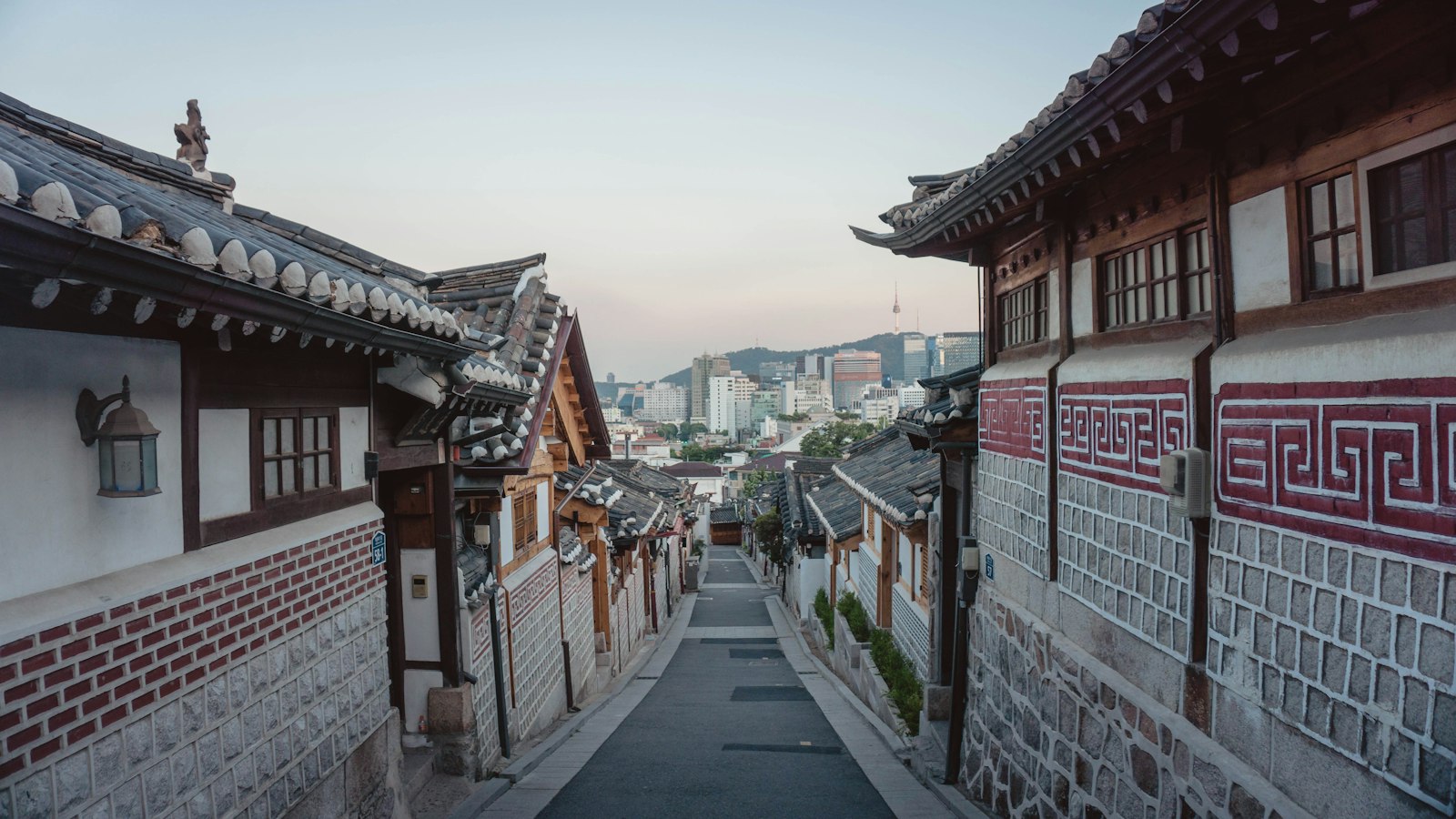
It is evening again in the alley, a week later. The truck is gone, the stairwell wall has a new scuff, and somebody has left a recycling bag at the right door at last. The newcomer now knows the door code, the date on the contract stamp and the name of the corner shop. The room is nothing special: a bed, a desk, a window with a view of another window. But the choice that put it there was made with open eyes, which is more than most of us can say about our first flat. Next time we meet in the lane, we will have the words ready for when the landlord phones.