Thursday, 17:40. Outside a broadcaster's building on the western side of Seoul, a line has been standing since the morning, and nobody in it looks bored. People hold folded paper tote bags, phone cases covered in tiny stickers, a thermos each. A few sit on the kerb with their lightsticks switched off to save the batteries. Two friends are rehearsing something under their breath, a pattern of names and claps that fits into the gaps of a song, the way you might practise a handshake. Inside, a crew is checking cameras. Somewhere in a dressing room, a group of young people who have not slept properly for days are having their hair fixed one last time.
We, the haeyo teachers, have wanted to write about this week for a long time, because it is the clearest window we know into how Korean pop actually works. A comeback is not a single day. It is a sequence of releases, broadcasts, queues, votes and small rituals, and each one has its own vocabulary, its own rules and its own price tag. This issue is about the idol world, and we start with the busiest seven days in it.
The scene above is a composite, not a report from one particular recording. The group is imaginary, and so is the line. Everything with a number in it, from here on, comes from a source we name.
Before the week: teasers, versions and photocards
A comeback usually begins days or weeks before the first music show. A company announces a date, then releases a trickle of images, short clips and track lists, which fans call teasers. We looked for an official standard schedule and did not find one: each company sets its own rhythm, and groups sometimes change it. What we can say is that the teaser period is when fans decide how much they will spend, because it is when the shape of the album becomes clear.
The album itself is rarely one object. A release normally comes in several versions, each with different cover designs and a randomly packed photocard of one member, plus pre-order gifts that depend on which shop sold it. The structure rewards buying more than one copy: if you want a particular member's card, you open albums until you find it, a habit fans call 앨범깡 (aelbamkkang). We cannot give you a typical album price, because we found no official figure for one, so check the shop page of whichever release you care about.
There are alternatives. Weverse sells an album as a digital code, and SM has a thin 'smart album' of its own, both introduced so that fans can collect without a stack of plastic. They exist partly because of an environmental argument: in April 2026 a Korean daily reported figures from a lawmaker's office on plastic produced by 13 entertainment companies between 2021 and 2024. The units in our copy of that report were garbled, so we do not repeat the totals, and we suggest you read the original.
Does the model still pay? Sales are volatile. The Circle Chart's 2025 annual list of the top 400 albums showed 7.4 percent fewer sales than the year before. Yet April 2026 was the first month of the year to pass 10 million albums in the same top 400, and January to April added up to about 35 million copies. The best-selling album of 2025 sold 3,397,810 copies. We read this as a market that moves with the release calendar, not as a trend in either direction.
The week at a glance
Korea has several weekly music programmes. Fans call them 음방 (eumbang), short for 음악방송. A group in promotion usually appears on most of them in a single week. The table lists what we could confirm; where we could not, it says so.
| Show (channel) | Day and time as we found it | Notes |
|---|---|---|
| M Countdown (Mnet) | Thursday, 18:00 | Weekly chart show. Its scoring mix is not stated reliably in public sources. |
| Music Bank (KBS2) | Friday | We found conflicting broadcast times, so we give the day only. |
| Show! Music Core (MBC) | Saturday, 15:30 | Recorded at the MBC Dream Center in Ilsan. |
| Inkigayo (SBS) | Sunday | Weekly chart show. |
| The Show (SBS Life) | Tuesday, 18:00 | Stopped in November 2025, restarted 2 June 2026 with a new voting app. |
| Show Champion (MBC M) | Day not confirmed | We could not confirm the current slot. |
Days and times come from community-edited reference pages and one news article; broadcasters can change slots. Confirm on the channel's own schedule before you travel.
Two details are worth knowing. First, The Show had a six-month gap: it stopped after a broadcaster withdrew from entertainment programming in November 2025, then returned on 2 June 2026 with votes handled through an app called BIGC. Second, on 1 June 2026 three music platforms launched a joint chart, the Global-K Chart, and one group, which we will not name, took first place on its daily, weekly and monthly lists in the first week. Charts are multiplying, and that matters in a week when every show wants to say who is number one.
A comeback is not a single day. It is a sequence of queues, votes and small rituals, and each one has a price tag.
Thursday, 18:00: the first show
Back to the queue. A show recording is a performance made for the cameras first and for the room second. The group usually arrives hours earlier for hair, make-up and a camera rehearsal, often with more than one run-through. The fans are let in later, and in a particular order.
Much of what we know about the order of the day comes from one 2019 article, which is old, and we use it only for the shape of events. A fan applies online beforehand, a name goes on a list, and on the day staff check identity at the entrance and send people in by list order. The same article described assembly at four in the morning for one recording, delays of an hour or two, and a four-hour wait in winter. It also said that filming and recording inside were banned, with warnings of expulsion and of sanctions on the fan club, and that some companies gave priority to fans who could prove they had bought an album or joined the fan club.
Companies have since refined the system. A Newspim report from November 2025 says that some agencies now ask for more than 50 days of a paid message subscription as the first condition for applying for an open-recording seat. The article does not name the companies, so we cannot say how common this is.
Bring ID, not a camera
Every account we read says that identity is checked at the door and that filming is banned. Both are the rule at recordings as a general matter, but the details differ by show, so read the show's own notice.
Expect to wait
The 2019 report quoted a four-in-the-morning start and a four-hour winter wait. Newer rules may have changed the hours, but not the principle that the queue comes before the performance.
Learn the chant first
Fans learn a song's chant pattern before they arrive, from the fan club's own guide. At a recording, the staff may also ask the audience to cheer at set moments for the camera.
Friday to Sunday: three more studios
Friday brings Music Bank, Saturday the long afternoon at MBC in Ilsan and Sunday Inkigayo. For a group this is the grind part of the week. A typical day has an early start, a rehearsal for the camera angles, a pre-recorded stage and, for some shows, a live one. Pre-recording, known in Korean as 사녹 (sanok, short for 사전녹화), means that the stage is filmed before the broadcast and shown later. The 2019 article said that even shows sold as live had pre-recorded some of their stages and that the share was growing. We do not have a current ratio. When a fan says she is going to 사녹, she means a recording, not a live show.
The reward for the fan is real but small. You may see the same stage three or four times in a day, from a seat that is not the best, under a rule that says you must not record it. The memory has to be your own. Many fans tell us the reward is the group itself, a few metres away, and the odd kindness of a crowd that has been through a long queue together.
Tuesday: the show that came back
Our week starts on a Thursday, but the calendar also has a Tuesday show. The Show, on SBS Life at 18:00, returned on 2 June 2026 with a different method from the older shows: it counts global streaming data together with what it calls a fandom engagement score, built from activity on Instagram, YouTube and TikTok, and the pre-show, live and post-show votes can only be cast in the BIGC app or on its website. The detailed weights have not been published. For a fan this means one more app to install, one more account to verify and one more set of rules about when voting opens.
We mention it because it shows the direction of travel. Each new show or chart wants fans to take part in a way that counts, and each way of taking part needs its own app. By the end of a long promotion, a keen fan may be holding five separate logins, which is a good reason to read our companion article on the app and wallet map before you commit.
The win, and the encore
The programme tallies a score for each song on the chart and, on the night, announces a winner. A show's score is a mix of music-service numbers, album sales, broadcast count and, depending on the show, fan votes. How the mix is weighted is disputed, and we deal with it in a separate article. For this one, only the ritual matters.
When a song wins, the group walks back on stage to receive a trophy, give a short speech and perform the winning song again. This second performance is the 앵콜 (aengkol, the encore). Many groups promise something in advance if they win. The promise is a 1위 공약 (iwi gongyak, 'number-one pledge'), and fans treasure them like small bets. We did not find an official count of how often this happens, so we describe the custom and nothing more.
Away from the studio: streaming, voting and the long night
Most of a comeback is lived on a phone. Fans organise 스밍 (seuming, from 'streaming') sessions: in a group chat, a post says what time everyone should play the new song and on which platforms. A 총공 (chonggong, 'total attack') is the heavier version, a coordinated push of streams and votes, usually in a time window on release day or on the night of a vote. Anyone can see the effect on a chart; nobody outside a fandom can say how big the push was.
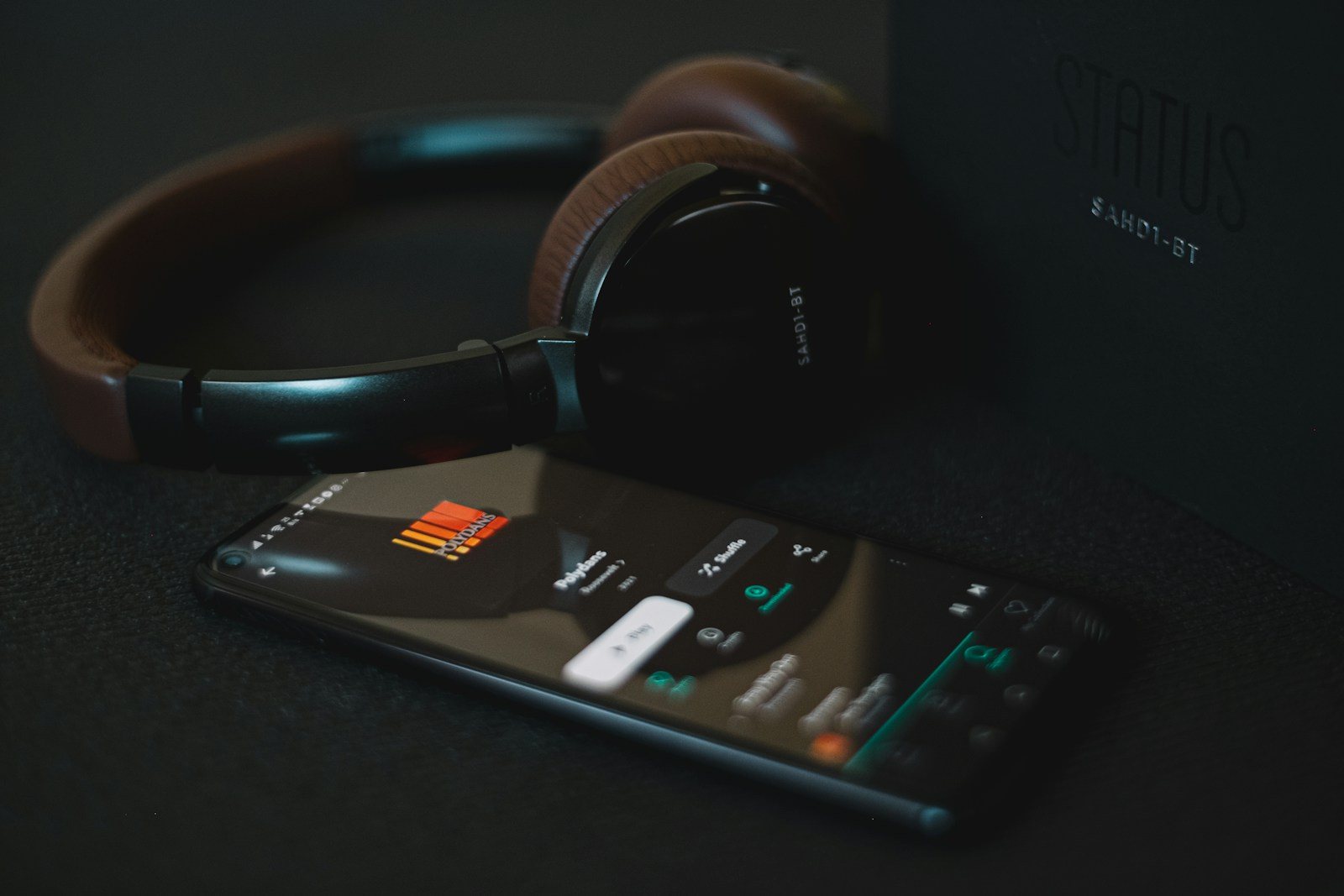
The same energy goes into votes. Music shows run fan votes through apps, and year-end awards do the same. Whether a fan abroad can vote, and how often, differs from notice to notice, so read the notice for each app. We found no reliable figure for the share of overseas voters.
Then there are the quieter rituals. A 생카 (saengka, short for 생일 카페) is a cafe rented for a day, usually to celebrate a member's birthday, where fans get small gifts such as drink sleeves and stickers and take pictures with displays. Birthday cafes and subway-station adverts are the best-known forms of 서포트 (seopoteu, 'support'), a gift funded by fans for a group. We did not find a reliable number for how many exist, so we offer none.
The older word for gifts to idols, 조공 (jogong), is falling out of favour in parts of the fandom, which prefers 'support'. In December 2025 one agency announced that it had stopped accepting every gift except fan letters, and other agencies list the items they will accept, or take only donation wreaths.
The lightstick, and the shape of a fan chant
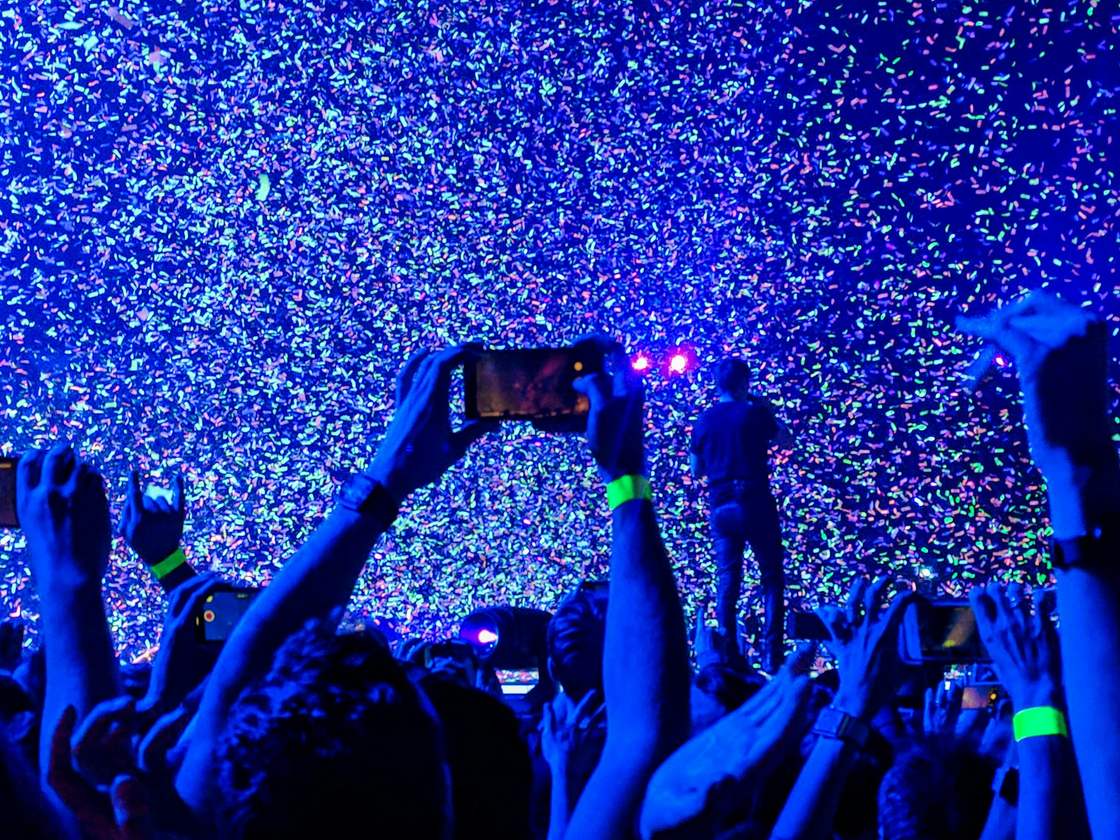
A 응원봉 (eungwonbong) is the group's official lightstick, and its colour and shape are part of the group's identity. At a concert, a fan opens an app, pairs the stick by Bluetooth and types in her seat. The venue's control system then sends colours and flashing patterns to the sticks by section, mostly by radio signal, so that thousands of sticks make one picture. Fans can choose whether the venue controls their stick or they do. A number of well-known groups use the system, and our sources disagree on who was first.
Critics raise three points: the colour loses its meaning if the venue chooses it; a pairing error can spoil an effect; and a company that sets the chant takes away something fans used to decide for themselves.
We said we would not print a real chant, so here is only the structure. A 응원법 (eungwonbeop) is a pattern for one song: in the gaps of the music, at places the fandom has agreed, the crowd calls out names or short phrases and claps in a set rhythm. The pattern is passed around in videos and documents made by the fan club and learnt before the show, a little like a school song. At a concert the result is 떼창 (ttechang), the whole hall singing together. If you plan to go, learn the pattern from the group's own notice and not from a stranger's video.
What this costs a fan
We finish with the bill. These are the figures we found, each with its source. They are not an average and not a budget, and several of them are for a single event.
| Item | Figure | What it is |
|---|---|---|
| Concert ticket, standard seat | 165,000 won (up from 154,000 the year before) | A group's 2025 show at the KSPO Dome in Seoul |
| Concert ticket, soundcheck seat | 220,000 won | Same show |
| Concert ticket, meet-and-greet package | 253,000 won (up 27 percent on the year) | Same show |
| Weverse fan-club membership | 30,000 won a year (about 24 dollars) | One artist community; a global membership for one big fandom is listed at 22 dollars before tax |
| Paid messages, one fan | About 50,000 won a month | One fan in her twenties across several apps; larger groups cost more |
| Overseas Hallyu fan, all Korean content | 16.6 US dollars a month | KOFICE survey average, for all Korean content and not only pop |
Dollar conversions are as quoted in the sources. The messages figure is one fan's account reported in the press, not a survey average.
Put them together and a month with a single concert looks like this. A standard ticket, 165,000 won; a membership, which spread over a year is 2,500 won a month; and 50,000 won of paid messages. That adds up to 217,500 won. This is our own arithmetic, built from reported prices, and it leaves out albums, travel, a hotel, food and anything bought at the venue.
If you are not in Korea there are extra layers. In June 2026 several groups used a three-step sale: a Korean fan-club pre-sale first, then a global fan-club pre-sale, then general sale, which puts overseas fans behind domestic ones. Interpark requires foreigners to verify an account with a foreign passport before booking a concert, with a fee of 8,000 won on products that need the check, and each account can be verified only once.
The law protects fans in one way. Since 22 March 2024, using a macro to buy tickets and resell them at a mark-up is illegal, with up to a year in prison or a fine of up to 10 million won. Resale between individuals is still hard to police.
When the week is over the stage is cleared, the lightsticks go back in their bags and the group moves on to the next job. The fan goes home with a photocard, a ticket stub and, if the rules were broken, a phone full of clips she was not supposed to take. A comeback is expensive and tiring, and for many of the people in the queue it is still the best week of the month.